 Save
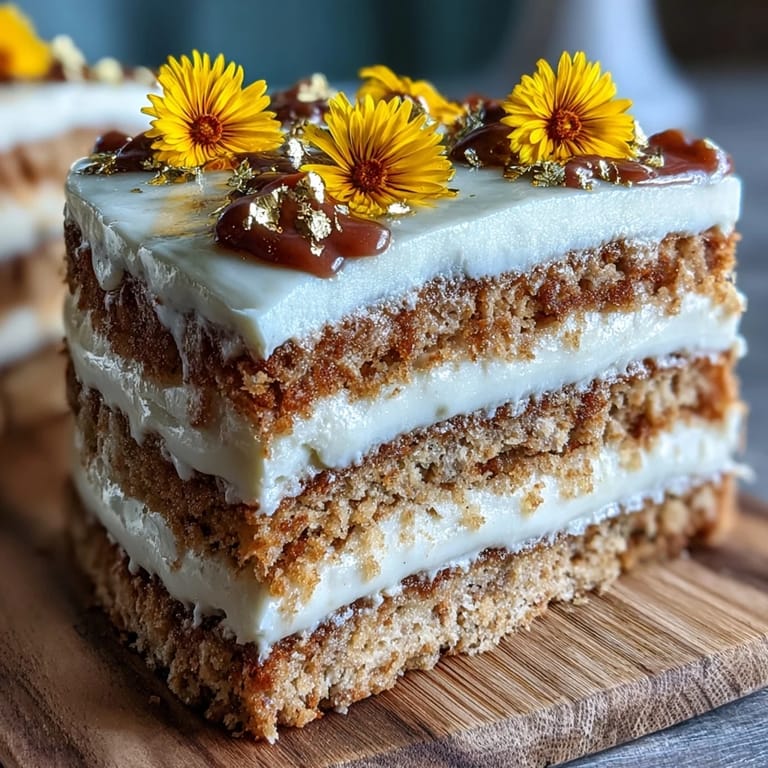
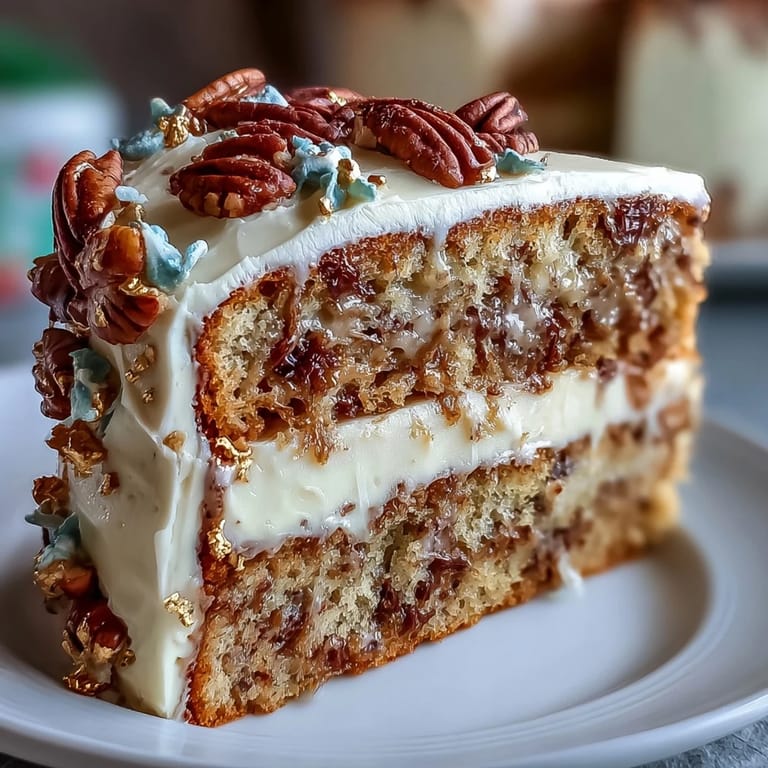
Save The morning of my friend's graduation, I stood in my kitchen holding a box of edible pansies and thinking about how much has changed since we met in college. Baking this cake felt like the perfect way to mark the moment—something elegant enough to feel ceremonial, but approachable enough that I could actually pull it off without a culinary degree. The vanilla sponge is forgiving, the Swiss meringue buttercream is impossibly silky once you get the hang of it, and those gold leaf accents transform it into something that looks like it came from a fancy bakery.
I'll never forget watching my friend's face when she saw this cake at her party—she actually teared up because someone had made something beautiful just for her. That's when I realized this isn't really about impressing people with fancy techniques; it's about showing up with something made by your own hands that says, "I'm proud of you and I wanted today to feel special."
Ingredients
- All-purpose flour (2 1/2 cups): The foundation of a tender crumb; room-temperature ingredients mix more evenly, so don't skip that part.
- Baking powder (2 1/2 tsp): Gives the cake its gentle rise without over-engineering it.
- Salt (1/2 tsp): Balances sweetness and enhances vanilla flavor in a way people can't quite identify.
- Unsalted butter (1 cup plus 1 1/2 cups for buttercream): Using unsalted lets you control the salt level and keeps the flavor clean and pure.
- Granulated sugar (2 cups plus 1 1/4 cups for buttercream): Dissolves completely into the batter, creating that tender crumb texture.
- Eggs (4 large, room temperature): Cold eggs won't incorporate properly, so pull them out an hour before baking.
- Vanilla extract (1 tbsp plus 2 tsp): Real vanilla makes a noticeable difference; the good stuff is worth it.
- Whole milk (1 cup): The acidity helps activate the baking powder and keeps the cake from being dense.
- Egg whites (5 large): For the buttercream; they're the base of that glossy, cloud-like frosting.
- Edible gold leaf: Choose sheets over flakes—they're easier to apply with a paintbrush and look more sophisticated.
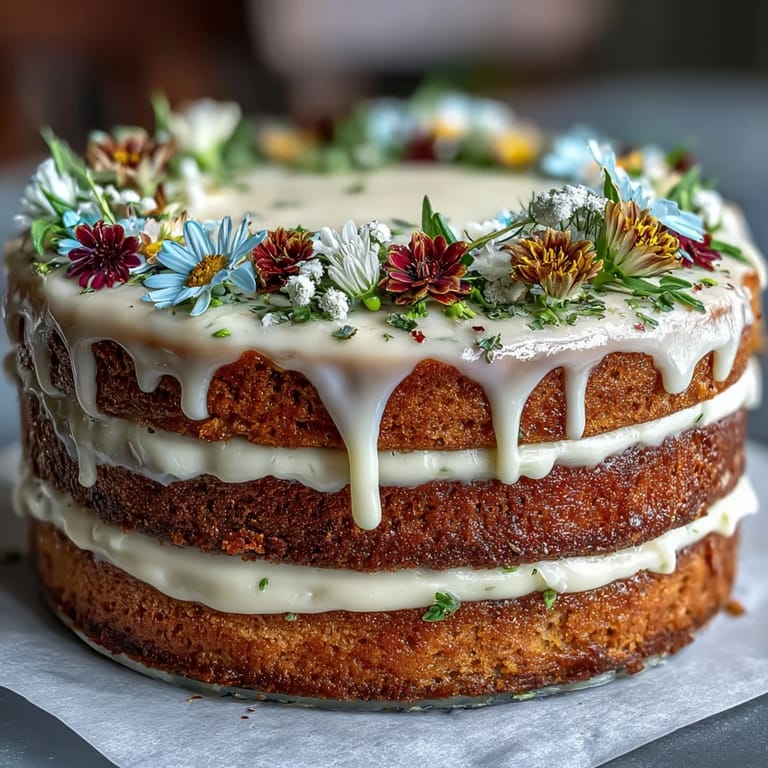
- Edible flowers (pansies, violets, roses): Only use varieties specifically labeled edible and pesticide-free; farmers markets are usually your best bet.
Tired of Takeout? 🥡
Get 10 meals you can make faster than delivery arrives. Seriously.
One email. No spam. Unsubscribe anytime.
Instructions
- Get your mise en place together:
- Preheat your oven to 350°F and grease those three cake pans—I like to line them with parchment paper so the cakes slide right out. Having everything prepped before you start mixing makes the whole process feel less chaotic.
- Whisk your dry ingredients:
- Combine flour, baking powder, and salt in a bowl and set it aside. This distributes the leavening evenly so you don't end up with random pockets of un-risen cake.
- Cream butter and sugar until fluffy:
- Beat them together for about 3 minutes—you'll see the mixture lighten in color and texture as air gets incorporated. This is where the magic starts; don't rush it.
- Add eggs one at a time:
- Beat well after each egg goes in so they're fully incorporated before the next one arrives. If the batter looks a bit curdled at any point, keep going; it'll come together.
- Mix in vanilla and alternate wet and dry:
- Start with some flour mixture, then milk, then flour again, ending with flour. Mix just until combined—overmixing develops gluten and makes the cake tough.
- Divide and bake:
- Pour batter evenly into your pans, smooth the tops, and bake for 28–32 minutes until a toothpick comes out clean. The kitchen will smell incredible.
- Cool with patience:
- Let the cakes sit in their pans for 10 minutes (they'll pull away slightly from the edges), then turn them out onto wire racks to cool completely. Warm cake crumbles; cold cake stays together.
- Make the Swiss meringue buttercream:
- Whisk egg whites and sugar in a heatproof bowl over simmering water, stirring constantly until the mixture reaches 160°F and feels smooth, about 5 minutes. This pasteurizes the eggs and dissolves the sugar.
- Whip to stiff peaks:
- Pour the warmed mixture into your stand mixer and beat on high until it's glossy, thick, and cool to the touch—this takes 8–10 minutes and it's worth waiting for. The bowl should be cool enough to hold against your cheek comfortably.
- Add butter gradually:
- Reduce speed to medium and add butter a few cubes at a time, mixing until smooth and silky. If it looks grainy or broken at any point, keep beating; it'll come back together.
- Finish with vanilla and salt:
- A pinch of salt and those 2 teaspoons of vanilla round out the flavor so it tastes sophisticated instead of one-dimensional.
- Assemble and crumb coat:
- Place your first cake layer on a serving plate, spread with buttercream, add the next layer, repeat, then cover the whole cake with a thin layer of frosting. Chill for 20 minutes so crumbs don't get mixed into your final coat.
- Apply final frosting layer:
- Give it a second, smoother layer of buttercream using an offset spatula. You don't need it to be perfectly perfect—that's where the flowers come in.
- Add gold leaf with a paintbrush:
- Use a food-safe paintbrush to gently apply gold leaf to sections of the cake—the frosting is sticky enough to hold it. Less is often more; you want it to look elegant, not overdone.
- Arrange flowers as your finishing touch:
- Place edible flowers on top and around the cake in whatever arrangement feels right to you. A gold ribbon around the base adds a final polished moment if you want it.
 Save
Save There's something about handing someone a cake you've made with your own hands that feels more meaningful than anything store-bought could ever be. When that cake is beautiful enough to photograph and delicious enough to remember, it becomes part of their celebration story.
Why Room Temperature Ingredients Matter
Cold butter and eggs don't incorporate evenly into the batter, which sounds technical but really just means you end up with a denser, grainier cake when it's done baking. I learned this the hard way by pulling eggs straight from the fridge and wondering why my cake came out with an odd texture. Now I set them out while I'm prepping the pans and measuring ingredients—it takes no extra effort and makes a noticeable difference in how soft and tender the final result is.
The Swiss Meringue Buttercream Moment
The first time I made this frosting, I was convinced something had gone wrong when the mixture looked broken after I added the butter. Turns out that grainy, curdled appearance is actually just a stage it goes through—keep the mixer running and it smooths out into something silky and luxurious. It's way more stable than regular buttercream once it sets, which means your cake won't slide around at room temperature and you can make it a day ahead without worrying.
Selecting and Storing Edible Flowers
Not all pretty flowers are safe to eat, so this is the one place where you can't improvise or guess. Farmers markets and specialty grocery stores sell flowers specifically labeled as edible and grown without pesticides, which is the only route worth taking. I keep mine in a shallow container lined with paper towels in the fridge and add them right before serving so they stay fresh and vibrant instead of wilting on the cake.
- Always verify that flowers are labeled edible and pesticide-free before using them.
- Apply flowers just before serving to keep them from browning or losing their color.
- If you're unsure about any flower, skip it and stick with varieties you can confirm are food-safe.
 Save
Save This cake celebrates someone's hard work and achievement in a way that tastes as good as it looks. Make it with care, and it becomes the kind of dessert people remember long after the last bite.
Recipe FAQs
- → What type of cake is used for the base?
A classic vanilla sponge cake serves as the base, providing a light and fluffy texture ideal for layering.
- → How is the buttercream prepared for this cake?
Swiss meringue buttercream is made by gently heating egg whites and sugar, then whipping until peaks form before incorporating softened butter and vanilla.
- → Are all the flowers safe to eat?
Only edible flowers grown without pesticides, such as pansies, violets, and roses, should be used for decoration to ensure safety.
- → How is the gold leaf applied to the cake?
Sheets of edible gold leaf are carefully transferred onto the buttercream using a food-safe paintbrush to create a shimmering effect.
- → Can this cake be made with a chocolate variation?
Yes, substitute half a cup of flour with cocoa powder in the sponge mix for a chocolate twist.
- → What tools are necessary for making this cake?
Essential tools include 8-inch round cake pans, an electric mixer, mixing bowls, an offset spatula, a food-safe paintbrush, and wire racks.