 Save
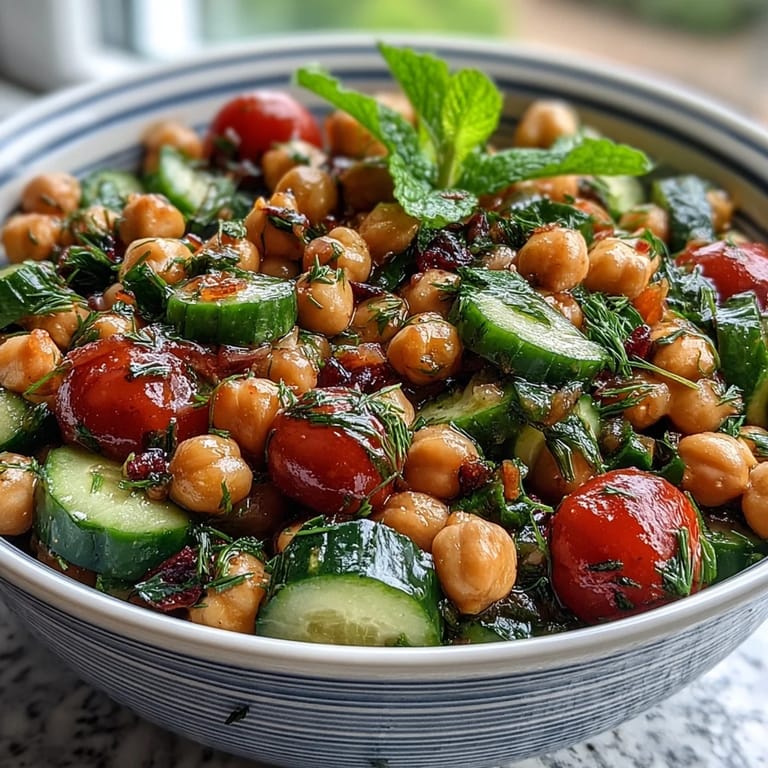
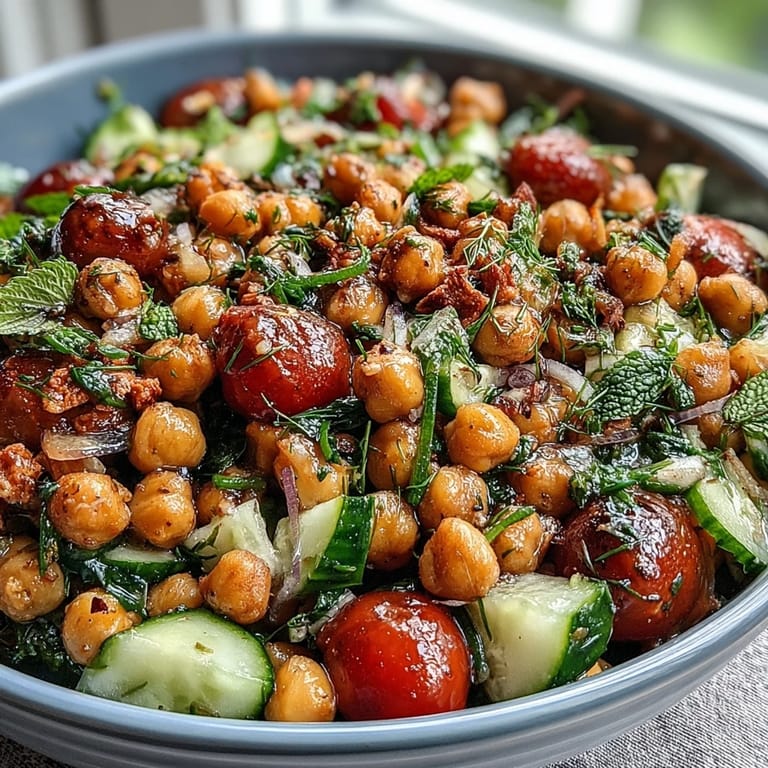
Save There's something about a bowl of cucumber salad that stops me mid-afternoon and reminds me why simple food matters most. I discovered this particular combination on a sweltering day when my fridge felt like it was mocking me with its sparse contents—a can of chickpeas, half a cucumber, a handful of herbs that were still somehow crisp. Twenty minutes later, I had something so bright and satisfying that I've made it countless times since, always amazed at how few ingredients it takes to feel genuinely nourished.
I made this for a potluck once where everyone brought the expected heavy casseroles and creamy sides, and mine was gone first—people kept coming back for just one more spoonful. What struck me wasn't the compliments, but watching someone I barely knew eat it straight from the bowl while standing in the kitchen, completely forgetting the pretense of the gathering.
Ingredients
- Canned chickpeas (15 oz / 425 g): Drain and rinse them thoroughly to remove that starchy liquid; it makes a real difference in how crisp and clean the salad tastes, and honestly, it took me way too long to realize this matters.
- English cucumber, large: The thin-skinned variety means you don't have to peel it, and the seeds stay tender instead of turning into a watery mess midway through.
- Cherry tomatoes, 1 cup: Halving them instead of quartering keeps them from releasing too much juice that would water down your dressing.
- Red onion, 1/4 small: Finely diced means it distributes flavor throughout rather than giving you surprise bursts of sharpness.
- Fresh parsley, 1/4 cup chopped: This is your green backbone; it keeps everything feeling fresh and alive, not just like a vegetable pile.
- Fresh mint leaves, 1/4 cup chopped (optional): If you use it, tear it by hand at the last moment because the knife bruises it and it loses that bright, almost cooling quality.
- Extra virgin olive oil, 3 tbsp: Don't use the cheap stuff here—this is one of the few places where quality actually sings through.
- Freshly squeezed lemon juice, 2 tbsp: Bottled lemon juice is fine in a pinch, but fresh juice makes the whole salad taste like sunshine instead of just tasting sour.
- Lemon zest, 1 tsp: This tiny detail adds brightness that juice alone cannot give you.
- Dijon mustard, 1 tsp: It acts as an emulsifier so your oil and acid actually become friends instead of sitting separately.
- Honey or maple syrup, 1/2 tsp (optional): A whisper of sweetness rounds everything out; skip it if you prefer the salad to stay purely savory.
- Sea salt and black pepper to taste: Always season at the end and adjust, because dried chickpeas take salt differently than you'd expect.
Tired of Takeout? 🥡
Get 10 meals you can make faster than delivery arrives. Seriously.
One email. No spam. Unsubscribe anytime.
Instructions
- Prepare your vegetables with intention:
- Dice the cucumber into roughly half-inch pieces, halve your cherry tomatoes, and mince that red onion as fine as you can manage. The consistency matters here—everything should be bite-sized and similar in size so each forkful feels balanced.
- Combine everything in your serving bowl:
- Throw the chickpeas, cucumber, tomatoes, red onion, and fresh herbs into your largest bowl. I like doing this step because it gives you a moment to appreciate the colors before they all come together.
- Build your vinaigrette with attention:
- In a separate small bowl or jar, whisk together the olive oil, fresh lemon juice, lemon zest, and Dijon mustard until it starts to emulsify and look slightly thicker. Add the honey if you're using it, plus your salt and pepper, and taste it on its own first—you want it bright and punchy because it's about to meet all those vegetables.
- Bring it all together gently:
- Pour the vinaigrette over everything and toss with the kind of care you'd use if the salad were something precious—you want the dressing distributed evenly but not bruising the vegetables or breaking down the cucumbers. Taste and adjust salt and pepper if needed; sometimes the chickpeas drink up more salt than expected.
- Let it breathe before serving:
- Serve immediately if you like everything crisp and separate, or let it sit for ten to fifteen minutes so the flavors start having a conversation with each other. It's genuinely good either way, though chilled tastes even better on a hot day.
 Save
Save My neighbor once asked why I kept making this same salad, and I realized it's because it never disappoints—it's reliable in a way that feels almost like loyalty. There's comfort in knowing that three pm hunger can be solved by something that takes fifteen minutes and leaves you feeling strong instead of sluggish.
How to Make This a Complete Meal
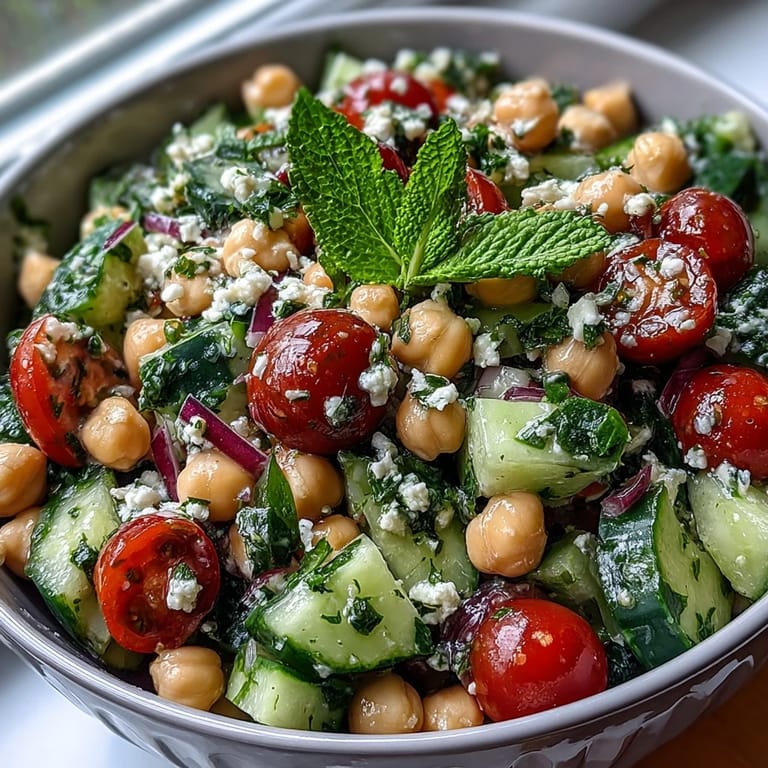
On its own, this salad is a gorgeous, protein-rich side dish, but when you want it to be the main event, crumble some good feta cheese over the top (or skip it for vegan), and serve alongside some grilled fish or chicken. I've also made it a full dinner by adding a handful of toasted nuts for crunch and richness, and suddenly what felt light and refreshing also felt genuinely satisfying in a deeper way.
Storage and Meal Prep Reality
Here's where this salad becomes your secret weapon for busy weeks: you can absolutely assemble the vegetable mixture in advance and keep it in the fridge for two days, but please don't add the dressing until you're ready to eat it. The cucumbers will start releasing water and everything gets soft and sad-looking, which defeats the whole purpose of making something fresh and bright.
Playing with Flavor and Texture
The beauty of this salad is how forgiving it is when you want to improvise. I've swapped out herbs depending on what was growing in my garden or what I found at the market, and it's genuinely never disappointed me. The core of good vegetables, good chickpeas, and a properly balanced vinaigrette stays solid no matter what else you add to it.
- Try adding crumbled walnuts or toasted pumpkin seeds for a textural contrast that makes it feel more substantial.
- Fresh dill or basil work beautifully if you don't have parsley or mint on hand, and they each give the salad a completely different personality.
- A tiny splash of white wine vinegar in addition to the lemon juice adds complexity without changing the essential character of the dressing.
 Save
Save This salad has become the dish I make when I want to remind myself that good food doesn't require complexity or hours of work. It's proof that sometimes the most nourishing things arrive from the simplest intentions.
Recipe FAQs
- → Can I make this salad ahead?
Yes, keep the dressing separate and combine just before serving to maintain freshness and crispness.
- → What herbs work best in this salad?
Parsley and mint are traditional, but dill or basil can be used as flavorful alternatives.
- → Is there a way to add sweetness to the vinaigrette?
Adding a teaspoon of honey or maple syrup gently balances the tartness without overpowering the flavors.
- → Can the salad be served warm?
While best chilled or at room temperature, serving slightly warm is possible though flavor and texture are optimal when cool.
- → What proteins complement this salad?
Grilled chicken or fish pair well, enhancing the protein content and making it more filling.