 Save
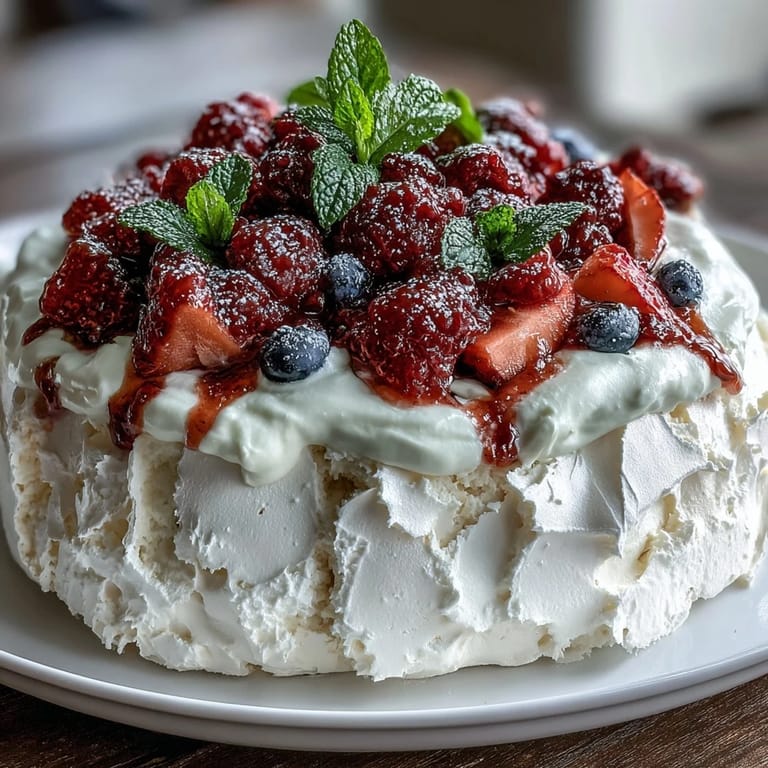
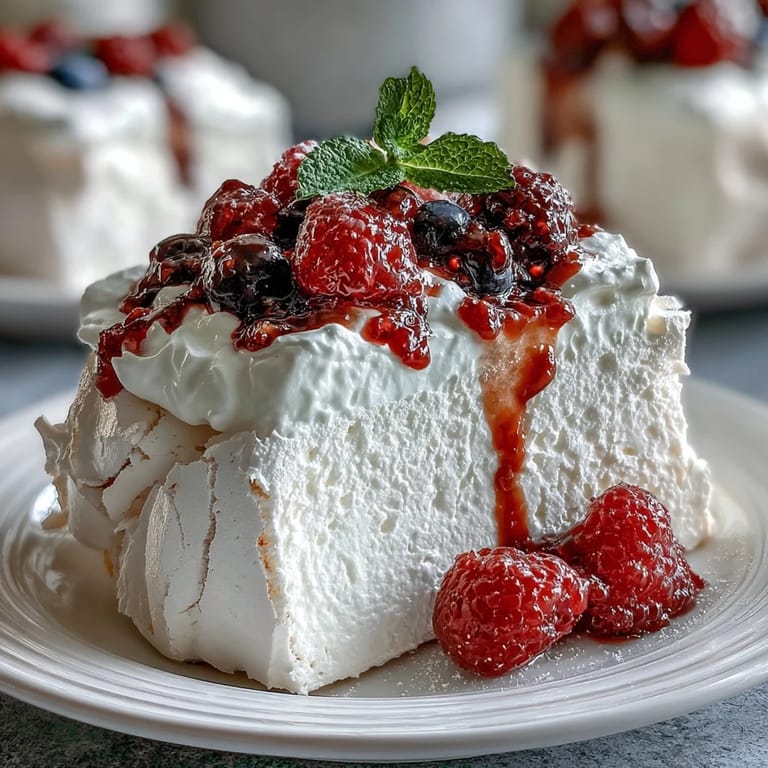
Save My mother stood in the kitchen doorway on a humid Sunday afternoon, skeptical about my pavlova ambitions until the oven door opened and revealed this crispy-edged, marshmallow-centered miracle. She'd always said meringue was temperamental, but watching her face light up when that first spoonful of berries and cream hit her fork made me understand why this dessert has graced celebration tables for generations. There's something almost magical about how egg whites transform into something so delicate and impressive, and I've been chasing that magic ever since.
I made this for my mum's birthday last spring when the first strawberries appeared at the market, their smell hitting me before I even saw them piled in their wooden crate. She'd mentioned wanting something light but special, something that tasted like celebration, and this pavlova seemed to understand that assignment perfectly. The moment I crowned it with those jewel-bright berries and handed her the plate, she took a photo before eating it—I knew I'd nailed it.
Ingredients
- Egg whites (4 large, room temperature): Room temperature eggs whip to greater volume, which is why patience here pays off in a taller, airier meringue—cold eggs will let you down every time.
- Superfine sugar (1 cup): The granule size matters; superfine dissolves completely into the egg whites, creating that glossy, stable structure regular sugar can't achieve.
- Cornstarch (1 tsp): This ingredient is your secret weapon against a weeping pavlova—it absorbs any moisture that tries to escape during baking.
- White vinegar (1 tsp): Acidic but subtle, it stabilizes the egg whites and prevents them from overbeating, giving you more control over the final texture.
- Pure vanilla extract (1 tsp for meringue, 1 tsp for cream): Real vanilla makes a noticeable difference in flavor; skip the imitation if you can.
- Pinch of salt: Just enough to enhance the sweetness without making itself known.
- Heavy whipping cream (1 cup, chilled): Cold cream whips faster and holds peaks better; let it sit in the fridge while you finish the meringue.
- Powdered sugar (2 tbsp for cream, plus optional for dusting): It dissolves instantly into cream without grittiness like granulated sugar would create.
- Mixed berries (strawberries, raspberries, blueberries, blackberries—4 cups total): Use whatever looks brightest at your market; the variety in color and flavor is what makes this dessert sing.
- Fresh mint (1 tbsp, optional): It adds a whisper of freshness that makes people pause and ask what that flavor is.
Tired of Takeout? 🥡
Get 10 meals you can make faster than delivery arrives. Seriously.
One email. No spam. Unsubscribe anytime.
Instructions
- Set yourself up for success:
- Preheat your oven to 250°F and line a baking sheet with parchment paper, then trace a 9-inch circle as your guide—this keeps things tidy and gives you something to follow. Make absolutely sure your mixing bowl and beaters are completely grease-free; even a hint of yolk or oil will sabotage your egg whites.
- Build the foundation:
- Drop your room-temperature egg whites into that spotless bowl with a pinch of salt, then beat until soft peaks form—when you lift the beaters, the peak should gently curl over rather than stand at attention. Gradually add the superfine sugar one tablespoon at a time while beating, which takes patience but creates that signature glossy finish you're after.
- Fold in the magic ingredients:
- Once your peaks are stiff and glossy, gently fold in the cornstarch, vinegar, and vanilla using a spatula with a light hand—you're preserving all that air you just whipped in. This part feels delicate, but trust your instincts; fold until just combined and you'll see the mixture get even silkier.
- Shape and bake:
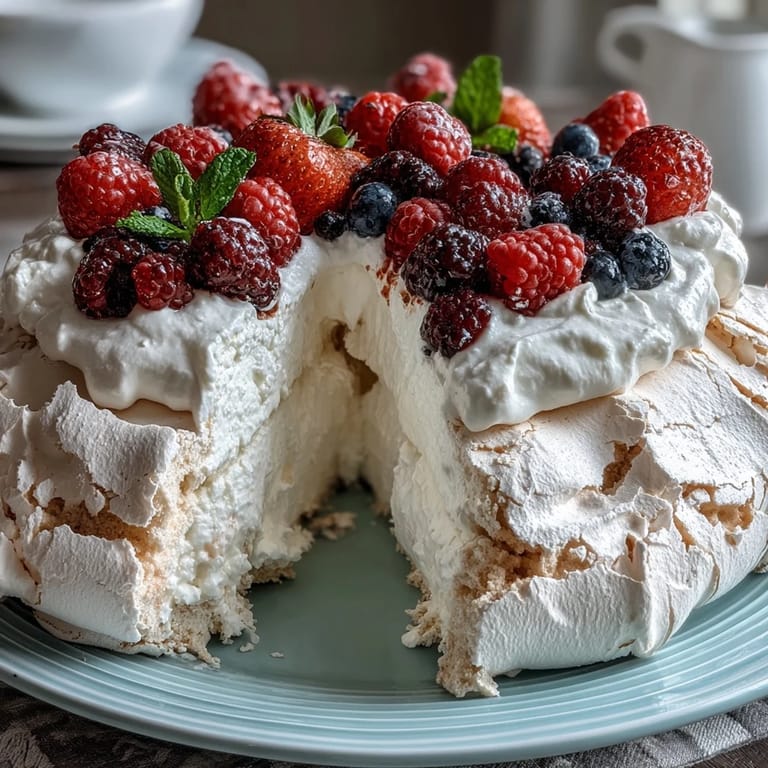
- Spoon the meringue onto your parchment circle, spreading it slightly wider than the guide and creating a gentle nest shape with higher edges to cradle the cream and berries. Bake for 1 hour 15 minutes—the pavlova should look pale cream-colored and sound crispy when you tap it, not soft or sticky.
- Let it cool slowly:
- Turn off the oven and crack the door open about 2 inches, leaving the pavlova inside for at least an hour as it cools; this prevents cracking and keeps that marshmallow center tender. Patience here transforms a baked egg foam into something truly special.
- Whip the cream:
- While your meringue cools, chill your mixing bowl and beaters, then whip the cold heavy cream with powdered sugar and vanilla until soft peaks form—this takes about 2 to 3 minutes. Stop as soon as the peaks hold their shape; overbeat and you'll have grainy butter instead of clouds.
- Assemble your masterpiece:
- Transfer the cooled meringue to your serving platter, crown it generously with whipped cream, then arrange your berries on top with a scattering of fresh mint if you're using it. Dust with a bit more powdered sugar just before serving if you want that final touch of elegance.
 Save
Save There's a moment when my grandmother took her first bite last year, and the crunch gave way to that pillowy center, and her eyes got this faraway look like she was tasting memory itself. Pavlova has a way of doing that—it's technical enough to feel like an accomplishment, but simple enough in its ingredients that it tastes like love, which is exactly what you want to serve on a day celebrating the women who shaped you.
The Science Behind the Crisp
The magic of pavlova lives in understanding what heat and time do to whipped egg whites. That low, slow bake dries out the exterior while keeping the center barely set, creating a structure that's simultaneously crispy and marshmallowy—a textural contradiction that somehow works perfectly. The cornstarch and vinegar aren't just flavor additions; they're stabilizers that help the meringue hold its shape and resist the moisture that would otherwise weep out as it cools.
Choosing Your Berries Wisely
The beauty of pavlova is that you're not locked into one berry combination—I've used whatever looked freshest and most beautiful at the market, from strawberries and raspberries in spring to blackberries and blueberries come late summer. Soft berries like raspberries get arranged last so they don't get crushed, while firmer strawberries can go on first without consequence. The tartness of berries balances the sweetness perfectly, so choose berries that excite you rather than following a recipe to the letter.
Storage and Make-Ahead Magic
Here's where pavlova becomes your friend for entertaining: you can bake the meringue base a full day ahead and store it in an airtight container, making the assembly on serving day a quick 10-minute job. The whipped cream should be made no more than an hour before serving to prevent it from breaking down, and the berries can be hulled and prepped a few hours in advance. One last thing before you serve—dust with powdered sugar at the very last second, right as you're walking to the table, so it stays pristine and looks freshly made.
- A dry day is essential for successful meringue, so check your weather forecast before planning this for a special dinner.
- Room-temperature eggs whip faster and fuller, so plan ahead and let them sit out for 30 minutes before starting.
- If your pavlova cracks despite your best efforts, just arrange berries and cream strategically to hide the evidence—nobody will notice.
 Save
Save This pavlova isn't just a dessert—it's a blank canvas for celebrating the people you love with something that tastes like you spent hours perfecting it, when really you just showed up with patience and decent ingredients. Make it once, and you'll understand why it keeps appearing on special occasion tables, generation after generation.
Recipe FAQs
- → How do I get a crisp pavlova shell with a soft center?
Bake the meringue at a low temperature for an extended time and allow it to cool slowly with the oven door slightly open to achieve the crisp shell and soft interior.
- → Can I use other fruits instead of mixed berries?
Yes, seasonal fruits like kiwi, peaches, or passionfruit can be used to vary the flavors while maintaining the pavlova's freshness.
- → Why is cornstarch added to the meringue?
Cornstarch helps stabilize the meringue, keeping the interior marshmallow-like and preventing cracking.
- → How can I make the whipped cream fluffier?
Chill the cream and mixing bowl beforehand and whip until soft peaks form to ensure a light, airy texture.
- → Is it necessary to use vinegar in the meringue?
Yes, vinegar acidifies the meringue, which helps achieve the desired texture and stability during baking.