 Save
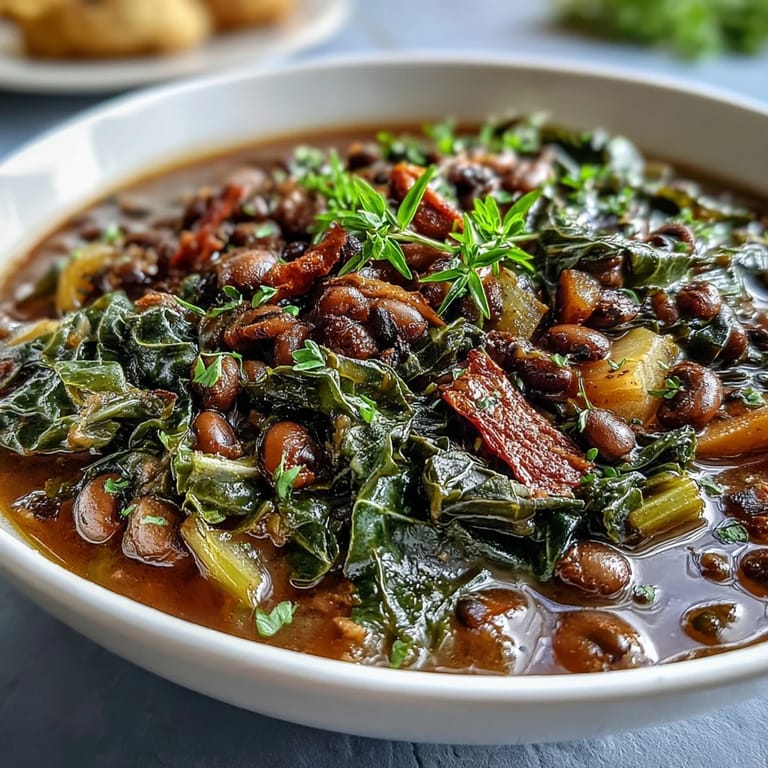
Save My grandmother's kitchen smelled like this stew every January, steam rising from her cast iron pot while she'd hum old songs and tell me stories about her mother making the same dish back in Georgia. I didn't learn to cook it until years later, after she'd passed, when my mom handed me a worn index card with barely legible notes scrawled in pencil. The first time I made it alone, I burnt the spices slightly and thought I'd ruined everything, but that charred warmth somehow made it taste even more like home. Now whenever the weather turns cold, I find myself standing at the stove, doing exactly what she did, feeling like she's right there beside me.
I made this for my partner's family the first time they came to our place, nervous and second-guessing myself until I ladled it into bowls and watched their faces light up. My mother-in-law asked for the recipe before dessert even hit the table, and that simple moment told me I'd gotten something right. Now it's the dish I turn to whenever we need to gather people around food and remind each other that we belong to something bigger than ourselves.
Ingredients
- Olive oil: Two tablespoons is enough to get everything sizzling without making the stew greasy, and it lets the vegetables release their sweetness as they soften.
- Yellow onion, carrots, and celery: This holy trinity is your foundation, and dicing them roughly the same size ensures they cook evenly and create a natural sweetness that balances the earthy greens.
- Garlic: Three cloves minced fine will perfume the whole pot without overpowering it, so don't skip this step or rush through mincing.
- Jalapeño: Optional but worthwhile, it adds a gentle warmth and complexity that makes people pause and ask what that flavor is.
- Collard greens: Remove those tough stems completely or they'll stay chewy and bitter, then chop the leaves roughly so they soften into the broth.
- Diced tomatoes: Their acid and brightness prevent the stew from becoming one-note and heavy, so use the canned version with juices for convenience without guilt.
- Black-eyed peas: Whether canned or cooked from dried, they're the protein heart of this dish and they soak up flavor beautifully as everything simmers together.
- Vegetable broth: Low-sodium is key so you control the final salt level and taste how the individual ingredients shine rather than getting masked by salt.
- Smoked paprika: This is where the soul comes from, that deep smoky note that makes people think there's meat in here even when there isn't.
- Thyme and bay leaves: These herbs don't shout but rather whisper throughout the stew, tying everything together with an earthy, almost old-fashioned warmth.
- Apple cider vinegar: Just a tablespoon at the end wakes everything up and makes the flavors pop without making the stew taste sour.
Tired of Takeout? 🥡
Get 10 meals you can make faster than delivery arrives. Seriously.
One email. No spam. Unsubscribe anytime.
Instructions
- Heat your oil and start with the base:
- Pour two tablespoons of olive oil into a large heavy pot or Dutch oven and set it over medium heat until you can feel the warmth radiating from it. Add your diced onion, carrots, celery, and jalapeño if you're using it, then let them cook for six to eight minutes, stirring occasionally, until the vegetables soften and the onion becomes translucent and sweet-smelling.
- Wake up the garlic:
- Stir in your minced garlic and give it about one full minute, no longer or it'll taste bitter, just long enough for the raw edge to disappear and that unmistakable garlic perfume to fill your kitchen.
- Toast the spices:
- Now add your smoked paprika, thyme, cayenne if you like heat, salt, and pepper, then stir constantly for one minute so the spices bloom and release their oils into the hot oil rather than tasting dusty and flat.
- Wilt the collard greens:
- Dump in all your chopped collard greens at once and stir continuously for three to four minutes, watching them shrink and soften and go from bright green to a more muted, cooked color.
- Build the stew:
- Pour in your diced tomatoes with all their juices, your black-eyed peas, the vegetable broth, water, and bay leaves, then stir everything together so nothing sticks to the bottom and the flavors start talking to each other.
- Let it simmer and meld:
- Bring the whole pot to a gentle simmer, then cover it and turn the heat down to low and let it bubble quietly for forty-five to fifty minutes, stirring occasionally, until the collard greens are tender enough to cut with a spoon and the broth has deepened in color and flavor.
- Finish and taste:
- Remove the bay leaves carefully, stir in the apple cider vinegar, then taste a spoonful and adjust the salt and pepper to your preference because this is your kitchen and your palate is the only authority that matters.
- Serve with intention:
- Ladle the stew into bowls while it's piping hot, maybe serve it alongside cornbread if you want to honor the tradition, and watch how people slow down and actually taste what they're eating.
 Save
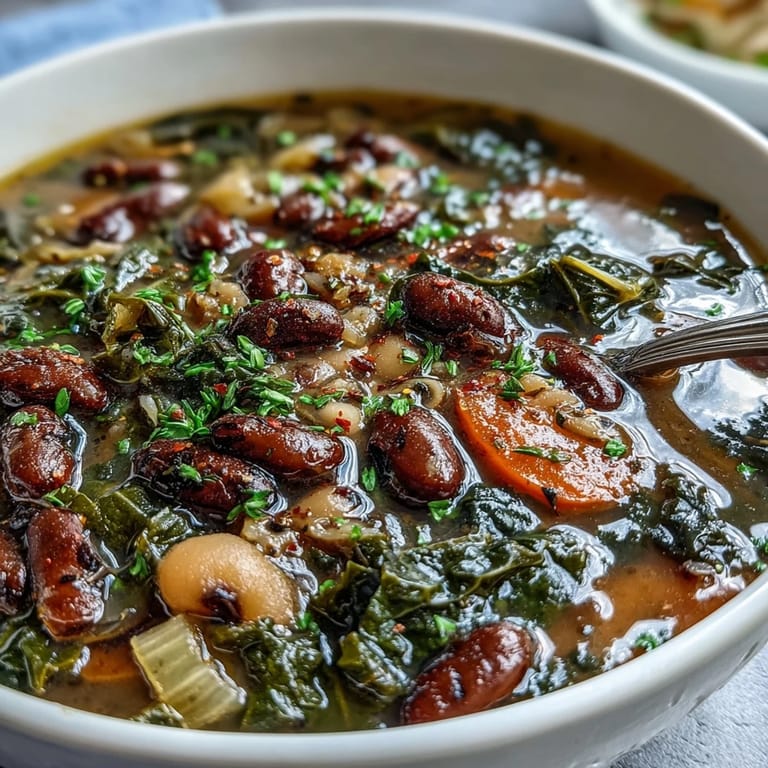
Save There's something sacred about feeding people food that took time and attention, and this stew somehow carries that message in every spoonful. When someone asks for seconds and then thirds, you know you've done more than just make dinner.
The Soul of Southern Cooking
This stew represents a particular kind of wisdom, the understanding that simple ingredients treated with respect and patience become something transcendent. My grandmother didn't have access to fancy equipment or imported spices, but she had an intuition about flavor and a willingness to let things take their time, and that's what I've tried to capture here. Every generation adds its own touch, whether that's a splash of hot sauce or a sprinkle of lemon juice, because soul food was always meant to be flexible and forgiving and deeply personal.
Making It Your Own
The beauty of this recipe is that it's a starting point, not a rigid set of rules you have to follow like a math equation. I've made it with extra garlic when I was feeling bold, with way more jalapeño when I wanted heat, with smoked turkey added because a friend was coming over and I wanted it richer. The stew adapts to what you need in that moment, what you have in your pantry, and what kind of day you're having.
Storage and Leftovers
This stew actually improves as it sits in the refrigerator, the flavors mingling overnight into something even deeper and more cohesive. Store it in an airtight container for up to four days, or freeze it for up to three months, and when you reheat it, add a splash of broth or water if it's gotten thick. This is the kind of food that makes weeknight dinner feel less like a chore and more like a gift to yourself.
- Leftovers taste better the next day, so make an extra batch on purpose.
- You can thin it with more broth if you prefer a brothier stew or leave it thick and chunky as is.
- Serve it over rice or with cornbread or just eat it straight from a bowl like comfort itself.
 Save
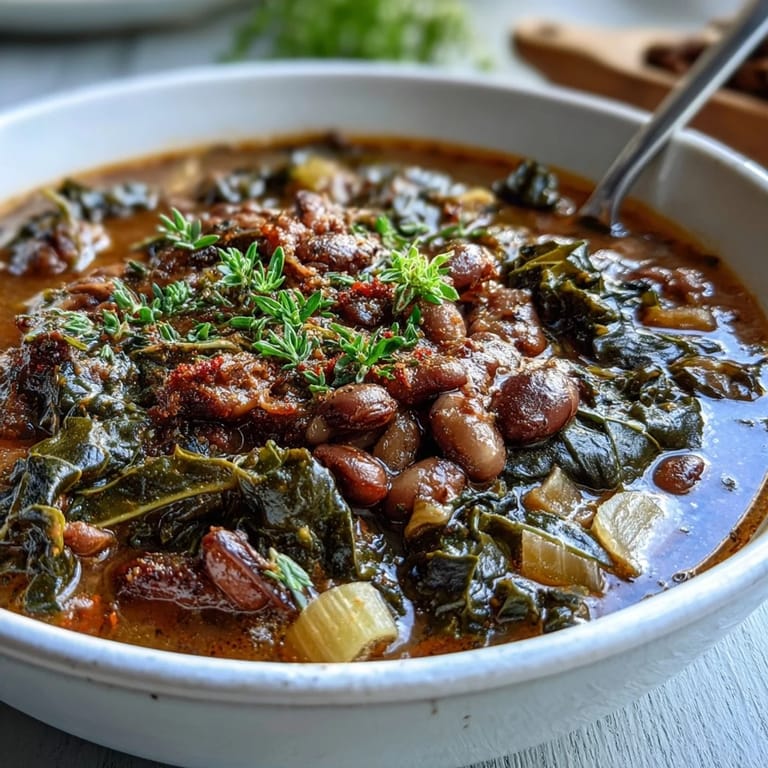
Save This is the kind of recipe I hope you'll make over and over, each time adjusting it slightly until it becomes yours. Soul food isn't about perfection, it's about showing up and nourishing the people you love with something real.
Recipe FAQs
- → Can I make this stew vegan?
Yes, simply omit any smoked meat additions and rely on the spices and vegetables for rich flavor.
- → What is the best way to prepare the collard greens?
Remove the stems and chop the leaves roughly, then cook them until just wilted to preserve texture and flavor.
- → How do smoked paprika and thyme affect the dish?
They add smoky and herbal notes that deepen the stew's complexity and complement the earthiness of the peas and greens.
- → Can I adjust the spice level?
Yes, increase jalapeño or cayenne pepper quantities for more heat according to your taste preference.
- → What sides pair well with this stew?
Cornbread, steamed rice, or a fresh green salad provide excellent accompaniments to balance the hearty stew.
- → How do I store leftover stew?
Keep leftovers in an airtight container in the refrigerator for up to four days. Reheat gently on the stove.