 Save
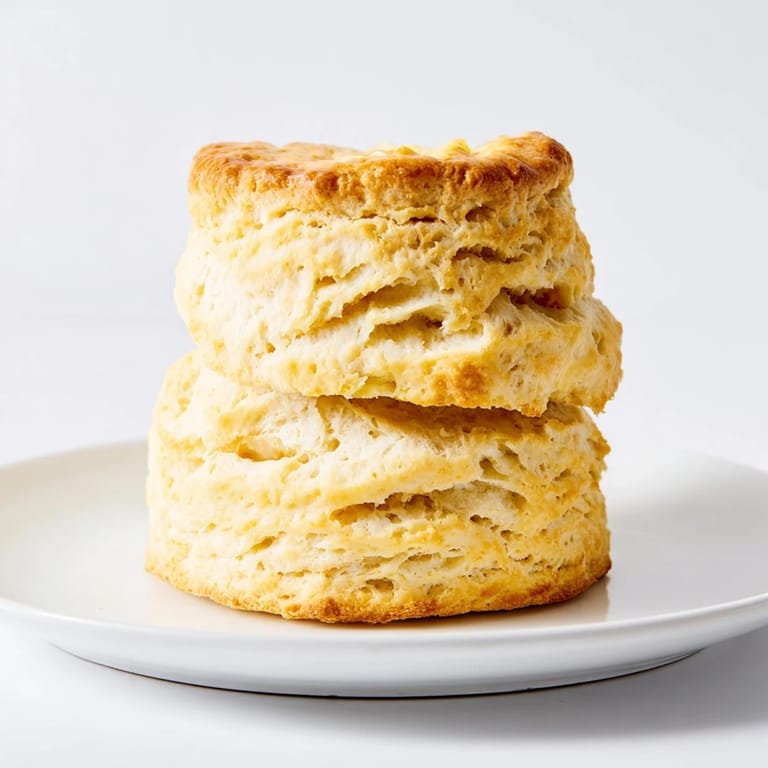
Save There's something about the smell of buttermilk biscuits baking that stops time in a kitchen. My grandmother used to make them on Sunday mornings, and the house would fill with this warm, yeasty sweetness that made everyone drift toward the kitchen without being asked. The first time I tried making them myself, I was convinced I'd ruin the dough, but those tall, golden biscuits came out of the oven like small miracles. Now I make them whenever someone needs comfort food or when I want to feel a little closer to those mornings. They're easier than you'd think, and the payoff is pure joy on a plate.
I remember bringing these to a potluck where everyone else had brought store-bought sides, and watching grown adults actually pause mid-conversation to appreciate a warm biscuit was its own kind of validation. My friend Sarah pulled me aside later and asked for the recipe, and now she makes them for her kids' school fundraisers. That's when you know a recipe has become something real.
Ingredients
- All-purpose flour (2 cups): The foundation, and you want it to be fresh because old flour absorbs water differently and your biscuits might be dense instead of airy.
- Baking powder and baking soda (1 tablespoon and ½ teaspoon): These are what give biscuits their lift; don't skip checking the expiration dates because they lose potency quietly.
- Fine sea salt (1 teaspoon): The unsung ingredient that makes the butter flavor pop and prevents everything from tasting flat.
- Granulated sugar (1 tablespoon): Just enough to deepen the crust color and give a hint of sweetness without making these into dessert.
- Cold unsalted butter, cubed (½ cup): The secret to flaky layers is keeping this cold right up until it hits the oven; warm butter makes tough, dense biscuits instead.
- Cold buttermilk (¾ cup): The acid reacts with the baking soda to lift the dough, and its tang is what makes these taste like home; room temperature buttermilk changes everything.
Tired of Takeout? 🥡
Get 10 meals you can make faster than delivery arrives. Seriously.
One email. No spam. Unsubscribe anytime.
Instructions
- Heat your oven and prep:
- Get your oven to 425°F and line a baking sheet with parchment paper so your biscuits don't stick. This is the moment you're committing to the process, so make sure you have everything ready.
- Mix the dry ingredients:
- Whisk together flour, baking powder, baking soda, salt, and sugar in a large bowl until they're evenly distributed. You're creating the framework that will trap air and create those beautiful layers.
- Work in the cold butter:
- Add the cold, cubed butter and use a pastry cutter or your fingertips to break it into coarse crumbs with some pea-sized pieces still visible. This is where patience matters; rushing this step by using warm hands or a food processor destroys the flakiness you're after.
- Add the buttermilk gently:
- Make a well in the center, pour in the cold buttermilk, and stir with a fork until just combined. The dough will look shaggy and slightly wet, but resist the urge to knead it like bread dough or your biscuits will be tough.
- Fold for layers:
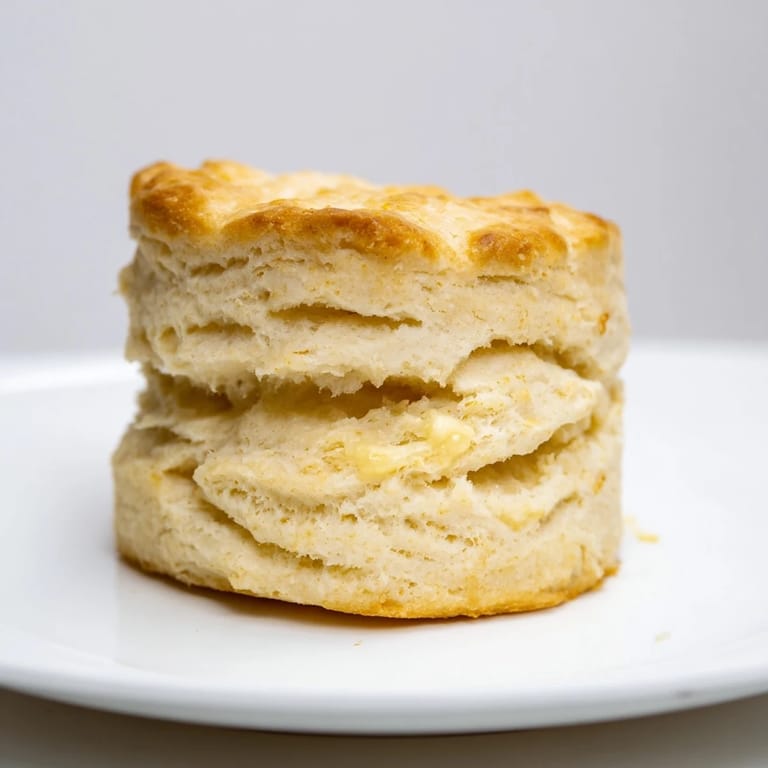
- Turn the dough onto a lightly floured surface and gently pat it into a rectangle about ½ inch thick, then fold it in half and pat it out again. Repeat this folding and patting three times total to create those laminated layers that make biscuits shatter beautifully when you pull them apart.
- Cut the biscuits:
- Pat the dough to a final thickness of 1 inch and cut out biscuits with a 2½ inch round cutter, pressing straight down without twisting. Twisting seals the edges and prevents proper rise; gather scraps gently and cut again, though the final biscuits will be slightly less fluffy than the first batch.
- Brush and bake:
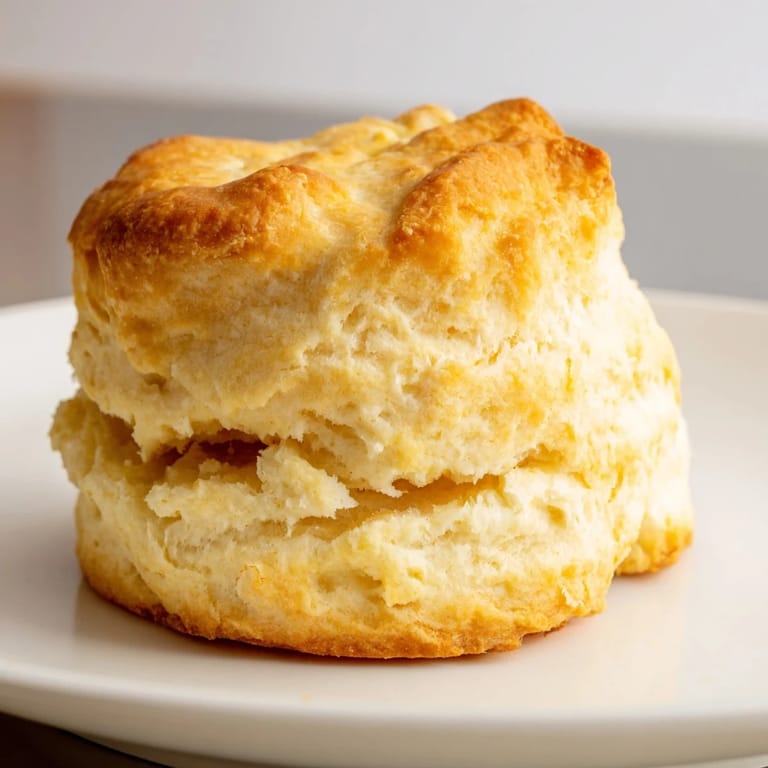
- Arrange biscuits close together on your baking sheet and brush the tops lightly with buttermilk, then bake for 13–15 minutes until tall and golden brown. The close spacing means they'll gently support each other as they rise, and the buttermilk wash creates a soft, slightly glossy crust.
- Cool and serve:
- Let them rest for a few minutes so the crumb sets, then serve them warm while the butter is still soft inside. This is the moment to split one open and watch the steam rise while you decide what goes on top.
 Save
Save The first time these came out perfectly, I called my mom just to tell her, and she laughed because she remembered me abandoning baking projects three times over. Now biscuits are something I've learned to trust my hands with, and that feeling of confidence in the kitchen has spilled into other things too.
Flavor Variations That Work
These biscuits are blank enough that they pair with anything, but they also love a little personality. Fold in ½ cup grated sharp cheddar and a pinch of black pepper for something savory, or add a handful of fresh herbs like chives or thyme if you're serving them with soup. I once added crispy bacon bits and a touch of smoked paprika, and they disappeared so fast I didn't even get a chance to photograph them. The beauty is that you can adjust the flavor without changing a single instruction.
The Buttermilk Substitute Secret
If you open the fridge and realize you're out of buttermilk, don't panic. Mix ¾ cup regular milk with 2 teaspoons of lemon juice or vinegar, let it sit for 5 minutes while you gather your other ingredients, and use it just like buttermilk. The acid curdles the milk slightly and gives you the same lift and tang, though I've found the bottled version tastes fractionally richer. In a pinch, plain yogurt thinned with a splash of milk works too, though you might need to adjust the texture as you mix since it's thicker.
Serving Ideas and Timing
Warm biscuits are a blank canvas for whatever moment you're having. On weekend mornings, we split them open and pile on honey and jam; with dinner, they're a vehicle for gravy and fried chicken; at parties, they disappear fastest when nobody's really watching. They stay soft for about an hour at room temperature, and reheating them briefly in a low oven brings back that warm, fresh-from-the-oven texture way better than the microwave does.
- If you want to make these ahead, prepare the dough, cut the biscuits, and freeze them unbaked on a baking sheet, then bake straight from frozen, adding just a minute or two to the bake time.
- Leftover biscuits split and toasted for breakfast with butter and jam are somehow better than the fresh ones, with a slight crispness that takes them in a new direction.
- These freeze beautifully for up to three months, so double the recipe on a weekend and you'll have golden comfort available whenever you need it.
 Save
Save These biscuits have become my small act of showing up for people, and there's something quietly powerful about that. A warm biscuit from your own hands says more than words sometimes.
Recipe FAQs
- → What creates the flaky layers in these biscuits?
Folding and patting the dough multiple times incorporates layers of cold butter and flour, which separate during baking to form flaky textures.
- → Can I substitute buttermilk if I don’t have any?
Yes, mix ¾ cup milk with 2 teaspoons lemon juice or vinegar and let it sit for 5 minutes to mimic buttermilk’s acidity.
- → How do I make sure my biscuits rise tall?
Use cold butter and buttermilk, avoid overmixing the dough, and bake immediately at a high temperature to ensure proper rise.
- → What tools are necessary to prepare these biscuits?
Essential tools include mixing bowls, a pastry cutter or forks, measuring cups, a baking sheet, parchment paper, and a biscuit cutter.
- → Can I add extra flavors to the biscuit dough?
Yes, grated cheddar, fresh herbs, or a pinch of black pepper can be added to the dough for extra flavor.