 Save
Save I burned my first batch of cabbage steaks because I got distracted watching them turn golden and forgot they needed flipping. The kitchen filled with that sharp, almost sweet smell of caramelized edges tipping into char. Instead of tossing them, I scraped off the worst bits and drizzled them with whatever green sauce I had in the fridge. That mistake taught me more about roasting cabbage than any perfect attempt could have. Now I set a timer and trust the process, but I still hover near the oven because watching them transform never gets old.
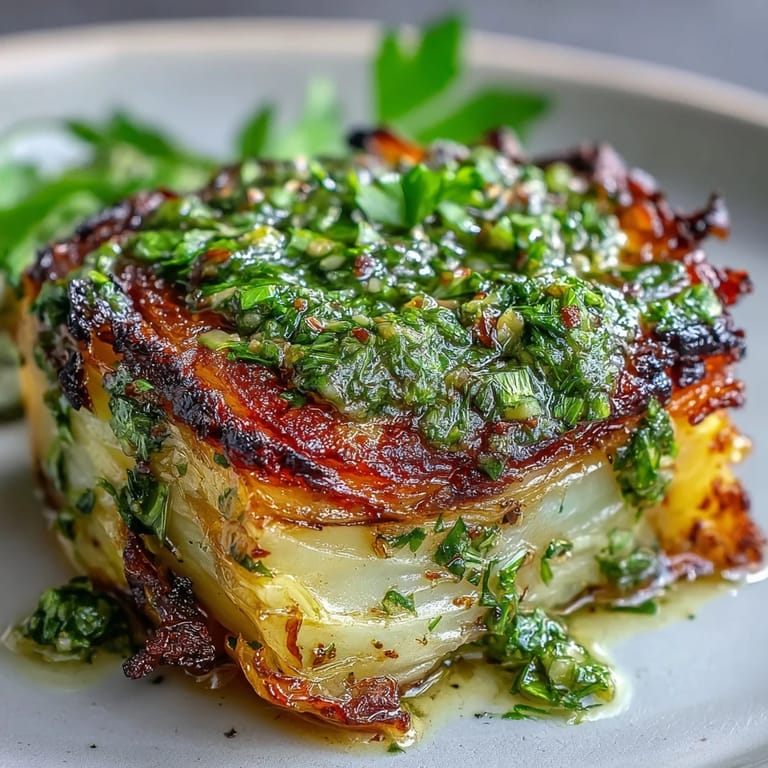
I made these for a dinner party where half the guests were vegan and half were skeptical carnivores. I plated the cabbage steaks with a heap of chimichurri pooling around the base, and everyone went quiet for a moment before digging in. One friend, who claims vegetables are just a vehicle for butter, asked for the recipe before dessert even arrived. That night I realized how much power a little char and a lot of herbs can have when you let vegetables be the star instead of an afterthought.
Ingredients
- Green cabbage: Choose a firm, heavy head with tight leaves so the steaks hold together when you slice them into thick rounds.
- Olive oil (for cabbage): This helps the edges crisp up and prevents sticking, so do not skimp or use cooking spray.
- Sea salt and black pepper: Simple seasoning lets the cabbage caramelize without competing flavors, and you want that natural sweetness to shine through.
- Fresh flat leaf parsley: The backbone of chimichurri, it should be bright green and smell grassy, not tired or yellowing.
- Fresh cilantro: Adds a citrusy note that balances the heat, but if you are one of those people who tastes soap, just use more parsley.
- Jalapeños: Seeding them tames the fire, but leave a few seeds in if you like a little sweat on your forehead.
- Garlic cloves: Mince them fine so they melt into the sauce instead of hitting you with raw sharpness.
- Extra virgin olive oil (for chimichurri): Use the good stuff here because it carries all the flavors and you will taste the difference.
- Red wine vinegar: Cuts through the richness and wakes up the herbs, a little tang goes a long way.
- Dried oregano: Adds an earthy, almost floral note that makes the chimichurri feel more complex than the sum of its parts.
- Red pepper flakes: Optional, but they add a slow building heat that lingers after the jalapeños fade.
Tired of Takeout? 🥡
Get 10 meals you can make faster than delivery arrives. Seriously.
One email. No spam. Unsubscribe anytime.
Instructions
- Preheat and Prep:
- Set your oven to 425°F and line a baking sheet with parchment so the cabbage does not stick or burn on the bottom. This high heat is what gives you those crispy, caramelized edges.
- Slice the Cabbage:
- Peel away any sad outer leaves, then cut the cabbage into 1 inch thick rounds starting from the center so the core holds each steak together. You should get about four solid steaks, and the loose bits can be saved for slaw.
- Season the Steaks:
- Lay the cabbage rounds on the baking sheet, brush both sides with olive oil, and season generously with salt and pepper. Do not be shy, the cabbage can handle it and needs that seasoning to build flavor.
- Roast Until Golden:
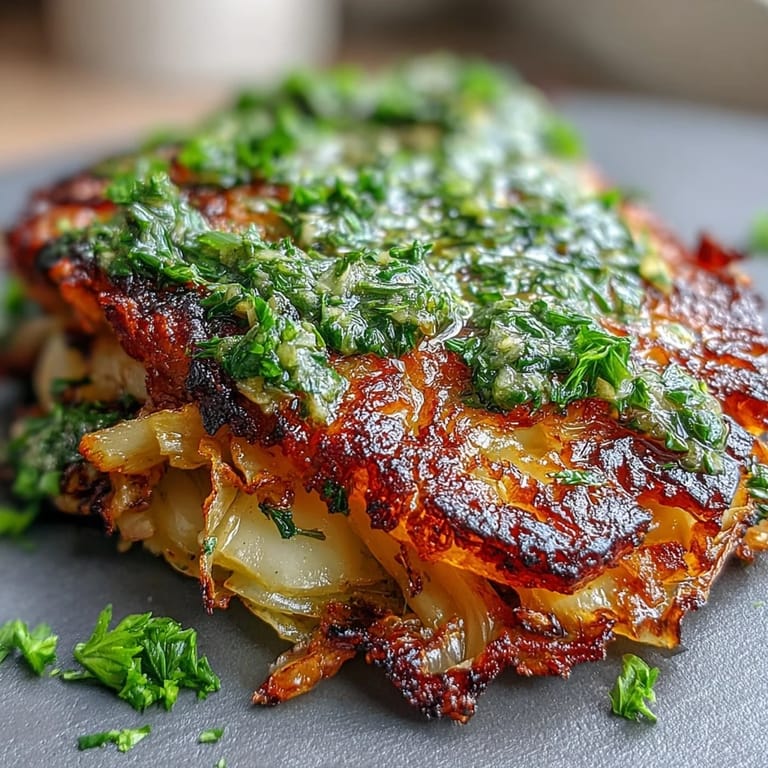
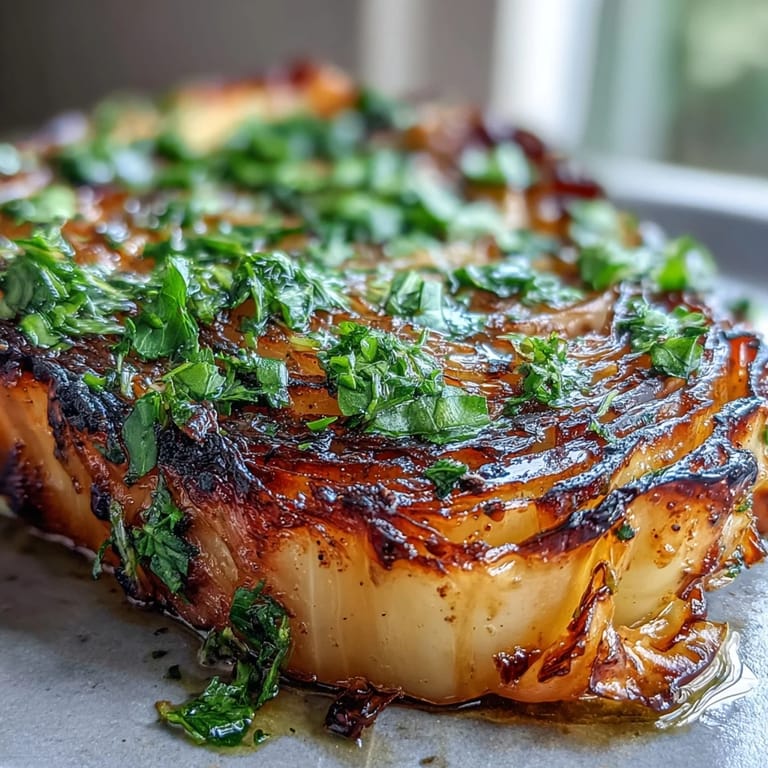
- Slide the pan into the oven and roast for 30 to 35 minutes, flipping halfway through so both sides get crispy and bronzed. The edges should look almost lacy and the center should be tender enough to cut with a fork.
- Make the Chimichurri:
- While the cabbage roasts, combine parsley, cilantro, jalapeños, garlic, olive oil, vinegar, oregano, red pepper flakes, salt, and black pepper in a bowl and stir until everything is coated and glossy. Let it sit for at least 10 minutes so the garlic mellows and the flavors blend together.
- Plate and Serve:
- Transfer the roasted cabbage steaks to plates and spoon a generous amount of chimichurri over each one, letting it pool around the edges. Serve immediately while the cabbage is still hot and the sauce is cool and bright.
 Save
Save The first time I served this to my mom, she stared at her plate like I had handed her a puzzle. She is from a generation that boiled cabbage into submission, so seeing it roasted and dressed like a proper entrée was a small shock. After the first bite, she nodded slowly and said it tasted like something she would order at a restaurant. That quiet compliment, coming from someone who rarely praises vegetables, felt like winning a tiny, meaningful battle.
Choosing the Right Cabbage
A firm, heavy cabbage with tightly packed leaves is your best friend here because it will hold together when sliced into thick steaks. Avoid any heads that feel light for their size or have loose, floppy outer leaves, which means they are past their prime. I like to give the cabbage a gentle squeeze at the store, it should feel dense and almost solid, not spongy. Green cabbage works best for this recipe, but you can try savoy if you want a more delicate texture, just know the leaves will crisp up faster. The core is what keeps each steak intact, so do not be tempted to remove it before roasting.
Adjusting the Heat Level
If you are nervous about spice, start with one jalapeño and taste the chimichurri before adding more. Removing all the seeds and membranes will give you the pepper flavor without much burn, which is perfect if you are feeding kids or anyone with a sensitive palate. I have made this with serrano peppers when I wanted more heat, and it was incredible but not for the faint of heart. You can also balance the spice by adding an extra tablespoon of vinegar or a squeeze of lime, which brightens the sauce and cools it down at the same time. The beauty of chimichurri is that it is forgiving, so taste as you go and adjust until it feels right to you.
Serving and Storage Tips
These cabbage steaks are best served hot from the oven with the chimichurri spooned over them just before eating. If you have leftovers, store the cabbage and sauce separately because the greens will wilt and darken if they sit in the oil too long. The chimichurri keeps in the fridge for up to three days and actually improves as the flavors meld, so I often make a double batch. Reheat the cabbage steaks in a hot oven for a few minutes to crisp them back up, or eat them cold on top of a grain bowl. They also pair beautifully with roasted sweet potatoes, quinoa, or even alongside grilled chicken if you are serving a mixed crowd.
- Drizzle any leftover chimichurri over roasted vegetables, grilled tofu, or scrambled eggs the next morning.
- If the cabbage steaks fall apart during roasting, just serve them as rustic wedges and no one will know the difference.
- A squeeze of fresh lemon or lime over the finished dish adds a final pop of brightness that ties everything together.
 Save
Save This dish has a way of surprising people who think cabbage is boring or bland. Once you see how simple ingredients can turn into something this vibrant and satisfying, it is hard to go back to the same old roasted vegetables.
Recipe FAQs
- → How do I prevent the cabbage steaks from falling apart?
Cut through the core of the cabbage to keep each steak intact. The core acts as a natural anchor holding the layers together during roasting.
- → Can I make the chimichurri ahead of time?
Yes, the chimichurri actually improves when made in advance. Prepare it up to 3 days ahead and refrigerate in an airtight container. The flavors will deepen and meld beautifully.
- → What can I serve with cabbage steaks?
These pair wonderfully with quinoa, brown rice, or couscous for a complete meal. They also complement grilled proteins, roasted chickpeas, or a fresh green salad.
- → How do I adjust the spice level?
For milder heat, use just one jalapeño and remove all seeds and membranes. Omit the red pepper flakes entirely. For more heat, keep the jalapeño seeds or add an extra pepper.
- → Can I use a different type of cabbage?
Absolutely. Red cabbage or savoy cabbage work well, though cooking times may vary slightly. Red cabbage adds beautiful color while savoy has a more delicate texture.
- → How do I know when the cabbage is done roasting?
Look for golden brown, crispy edges with some charring. The cabbage should be tender when pierced with a fork but still hold its shape. This typically takes 30-35 minutes at 425°F.