 Save
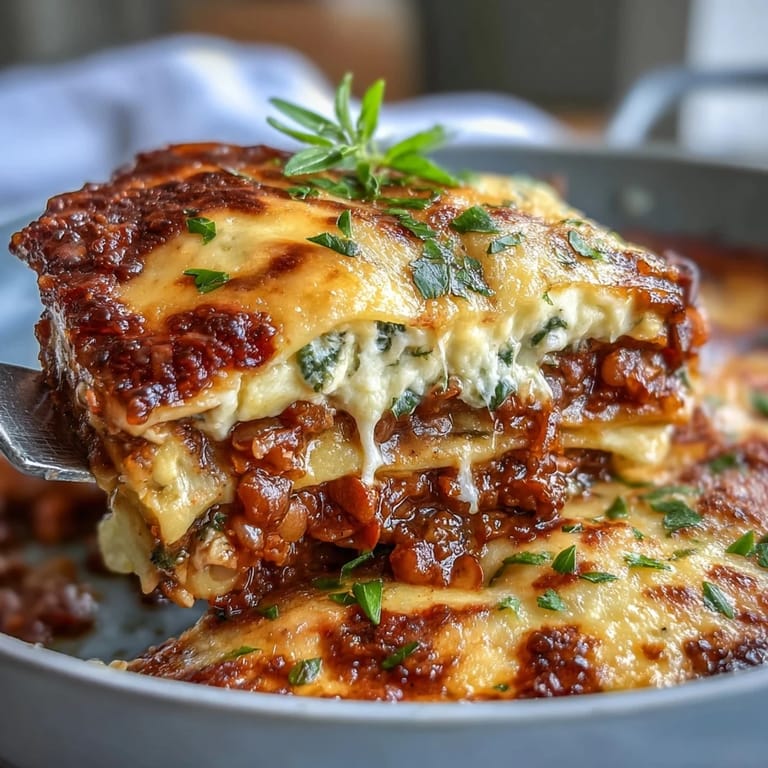
Save There's something deeply satisfying about layering a lasagne straight in the pan you'll bake it in—no fussing with separate dishes, no regret about the cleanup ahead. I stumbled onto this smoky lentil version one autumn evening when I wanted something hearty but didn't have ground meat on hand, only a bag of red lentils and whatever vegetables were lurking in my crisper drawer. What started as a improvisation became something I now make regularly, especially when friends mention they're eating more plant-based meals but still crave real comfort food.
I made this for a dinner party where one guest mentioned offhandedly that she'd gone vegetarian but missed hearty lasagne more than anything. Watching her face when she tasted the smoky richness, then asking for the recipe—that's when I knew this dish had something special. It's the kind of meal that doesn't announce itself as plant-based; it just sits on the plate looking golden and inviting, speaking for itself.
Ingredients
- Olive oil: Use good quality here since it's not cooked long—it carries the flavor of everything that follows.
- Onion and garlic: The aromatic foundation, chopped fine so they soften completely and disappear into the sauce.
- Carrot, red bell pepper, mushrooms, courgettes: Each vegetable adds its own sweetness and texture; don't skip the mushrooms as they provide an earthy umami that anchors the whole dish.
- Smoked paprika: This is non-negotiable—it's the ingredient that makes people wonder if there's meat hiding in here somewhere.
- Dried oregano and thyme: Dried herbs work better than fresh here because they're cooked down into the sauce over time, their flavors concentrating rather than fading.
- Tomato paste: One tablespoon concentrates tomato flavor and adds slight sweetness to balance the smoke and spice.
- Chopped tomatoes: Canned is perfect; they've been picked and processed at peak ripeness, often better than fresh tomatoes in winter.
- Soy sauce: A tablespoon adds umami depth without tasting noticeably salty or Asian—it just rounds out the savory notes.
- Red lentils: These are the star; they cook quickly and soften into the sauce, creating body and protein without any chewiness.
- Vegetable stock: The medium that brings everything together and helps the lentils cook through properly.
- Butter and flour: The roux base for béchamel, whisked together to form a paste before the milk goes in, preventing lumps.
- Whole milk: Full-fat milk creates a silky sauce; don't skimp with low-fat versions if you want that luxurious feel.
- Ground nutmeg: A tiny amount in béchamel is traditional and essential—it adds warmth without being identifiable.
- Mature cheddar or hard vegetarian cheese: Aged cheese has sharper flavor than mild varieties, so it stands up to the smoky bolognese without getting lost.
- No-boil lasagne sheets: These aren't lazy cooking; they're actually superior here because they absorb moisture from the sauce as it bakes, becoming tender without pre-cooking.
- Mozzarella for topping: Fresh mozzarella would turn rubbery; use low-moisture mozzarella or a blend of cheeses that will brown and bubble attractively.
Tired of Takeout? 🥡
Get 10 meals you can make faster than delivery arrives. Seriously.
One email. No spam. Unsubscribe anytime.
Instructions
- Prepare and preheat:
- Get your oven heating to 200°C (180°C fan) while you gather everything—this recipe moves quickly once you start, and you want the oven ready.
- Build the flavor base:
- Heat olive oil in your large ovenproof pan over medium heat, then add onion and garlic, cooking just until fragrant and soft, about 2 minutes. You want them silent and surrendered into the oil, not brown.
- Introduce the vegetables:
- Add your carrot, pepper, mushrooms, and courgettes, stirring often so everything cooks evenly and releases its moisture, about 5–6 minutes. The pan will smell incredible—that's your signal they're nearly ready.
- Awaken the spices:
- Stir in smoked paprika, oregano, thyme, chili flakes if using, and tomato paste, cooking just 1 minute. This bloom of heat activates the spices so they coat everything with flavor rather than tasting dusty.
- Build the sauce:
- Add canned tomatoes, soy sauce, rinsed red lentils, and vegetable stock, stirring well. Bring to a gentle simmer, then cover the pan loosely and let it cook for 15–20 minutes, stirring occasionally, until lentils are tender and the sauce has thickened—you should see visible separation when you drag your spoon across the bottom.
- Make the béchamel:
- In a separate medium saucepan, melt butter over medium heat, then sprinkle flour over it and stir constantly for 1 minute—this cooks out the raw flour taste. Gradually pour in milk while whisking continuously to prevent lumps, then keep stirring until the sauce coats the back of a spoon, about 5 minutes.
- Season the béchamel:
- Remove from heat and stir in nutmeg, grated cheese, salt, and white pepper. Taste it—the cheese should add sharpness, the nutmeg a whisper of warmth.
- Layer the lasagne:
- This is where the magic happens: remove half the vegetable bolognese from your ovenproof pan and set aside. Spread one-third of the béchamel over the remaining sauce still in the pan, then break lasagne sheets to fit in a single layer on top.
- Continue building:
- Spread half the reserved bolognese over the pasta, pour another third of béchamel over that, then add another layer of lasagne sheets, breaking them to fit the pan.
- Finish and top:
- Layer the remaining bolognese, top with final lasagne sheets, and pour the remaining béchamel over everything, making sure to coat all visible pasta. Sprinkle mozzarella over the top in an even layer.
- Bake with patience:
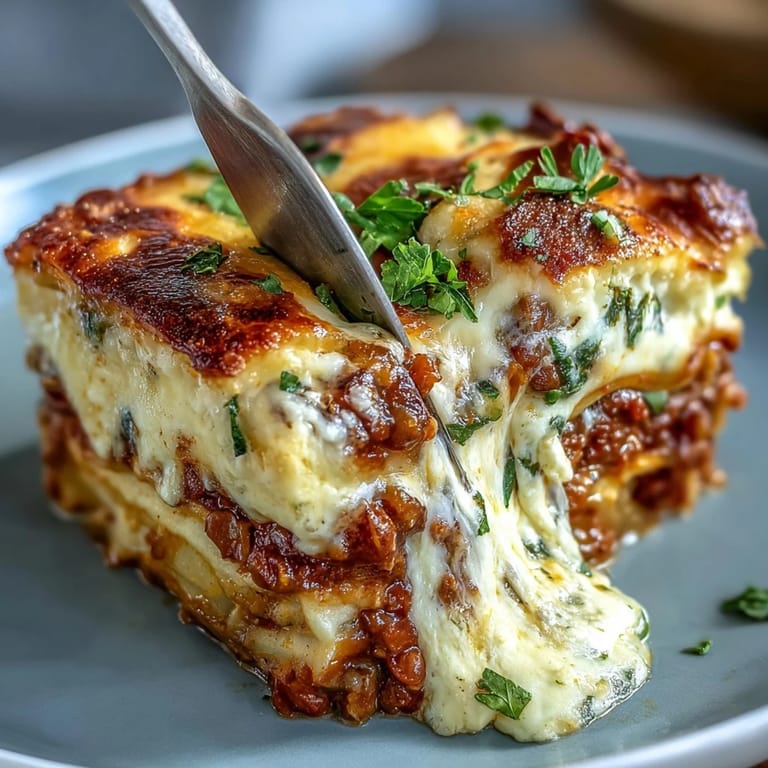
- Cover the pan loosely with foil—this traps steam and helps the pasta cook through without the top drying out. Bake for 25 minutes, then remove foil and bake another 10–15 minutes until the cheese is golden, bubbling at the edges, and you can see sauce just barely moving beneath.
- Rest before serving:
- Let the lasagne sit for 10 minutes—this allows the layers to set slightly so they don't collapse when you serve them. Scatter fresh basil over if you have it.
 Save
Save The moment I realized this dish had won me over completely was when my partner, who grew up eating traditional meat lasagne every Sunday at his grandmother's table, asked for thirds without any hesitation. That's when I understood this wasn't a vegetable substitute for something missing—it was its own complete, satisfying thing that happened to be plant-based.
The One-Pan Advantage
Using an ovenproof pan for both cooking and baking transforms this from a recipe requiring multiple dishes into something genuinely effortless. The bolognese simmers directly in the pan you'll layer into, which means the bottom layer gets infused with concentrated flavor as the whole thing bakes—the pasta absorbs it all. No transferring, no fussing, and the cleanup is just one pan instead of the usual three or four.
Why Red Lentils Are Perfect Here
Unlike brown or green lentils that hold their shape stubbornly, red lentils partially dissolve as they cook, creating a naturally creamy texture throughout the sauce. They cook in about 20 minutes, which means you're not waiting around for a slow simmer, and their mild flavor allows the smoked paprika and herbs to shine without competition. This also means the sauce clings beautifully to every layer of pasta, so each bite feels cohesive and complete.
Making It Your Own
This recipe is sturdy enough to accommodate variations without falling apart—if you have wine on hand, a splash of red wine added with the tomatoes deepens everything beautifully. You can swap mushrooms for extra lentils, add spinach between layers, or use a mix of whatever vegetables you have lurking in your crisper.
- For a vegan version, swap butter for good olive oil or vegan butter, use plant-based milk, and a dairy-free hard cheese for the filling.
- If you want extra smokiness, add a pinch of smoked salt to the béchamel as well.
- Serve alongside a crisp green salad or warm garlic bread to soak up any sauce on the plate.
 Save
Save This lasagne sits somewhere between Italian tradition and vegetable-forward cooking, and it lands in a place that feels both comforting and genuinely exciting. Make it once for yourself, then again for someone you want to feed well.
Recipe FAQs
- → Can I make this lasagne ahead of time?
Yes, you can assemble the entire lasagne up to 24 hours in advance and refrigerate it covered. Allow an extra 10-15 minutes baking time if cooking from cold.
- → What can I use instead of red lentils?
Green or brown lentils work well but may take longer to cook. Alternatively, use crumbled firm tofu or additional vegetables for a lentil-free version.
- → How do I know when the lasagne is done?
The lasagne is ready when the top is golden brown, the sauce is bubbling around the edges, and a knife inserted through the center feels little resistance when piercing the pasta.
- → Can I freeze this lasagne?
Yes, freeze the assembled unbaked lasagne wrapped tightly for up to 3 months. Thaw overnight in the refrigerator before baking as directed.
- → Why use no-boil lasagne sheets?
No-boil sheets absorb moisture from the sauces during baking, becoming perfectly tender without the extra step of pre-cooking and preventing soggy layers.
- → What vegetables work best in this filling?
Mushrooms, courgettes, and bell peppers provide excellent texture and flavor. You could also add spinach, aubergine, or butternut squash depending on preference.