 Save
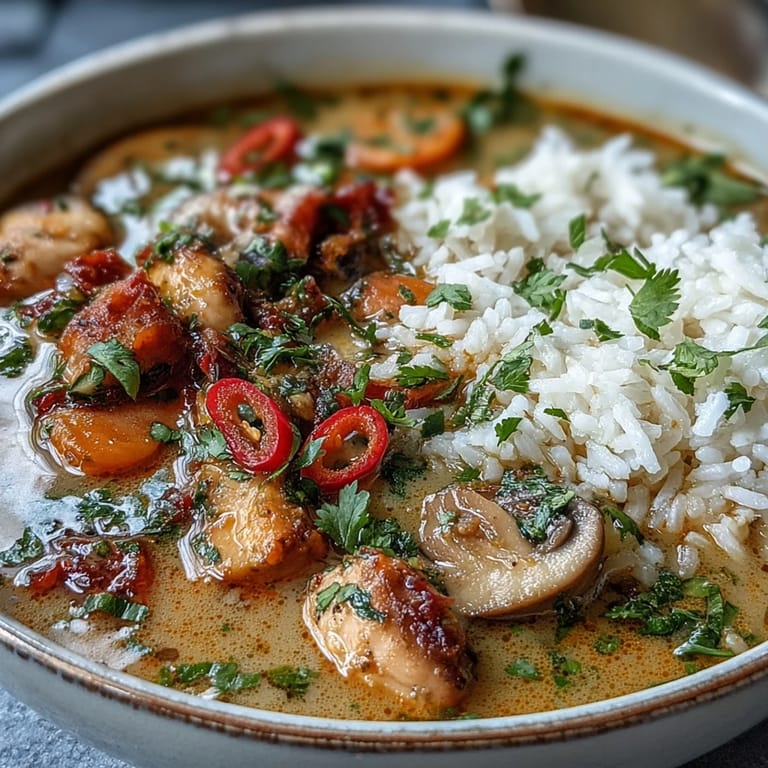
Save There's something about the way coconut milk curls into chicken stock that makes a kitchen feel alive. I discovered this soup on a gray Tuesday afternoon when my neighbor brought over a jar of red curry paste from her recent trip to Bangkok, and I had exactly the ingredients to do it justice. The aroma that filled my apartment was so insistent, so welcoming, that I found myself calling friends to come over without even tasting it first. Within an hour, four of us were huddled around steaming bowls, and I realized this wasn't just dinner—it was the kind of meal that makes people linger.
I made this for my mother the night she returned from physical therapy, when she needed something warm that didn't require her to chew too hard or think too much. She sat at the kitchen counter, still in her coat, and asked me to ladle it into her favorite bowl before I'd even finished garnishing. That quiet moment—her hands wrapped around warmth, the steam softening the worry lines on her face—reminded me why I cook at all.
Ingredients
- Boneless, skinless chicken thighs (500 g): Thighs stay tender and juicy where breasts would dry out, and they have enough fat to flavor the broth without tasting heavy.
- Mushrooms (200 g), sliced: They'll soak up the curry while adding an earthy foundation that balances the spice and sweetness.
- Carrots (2 medium), peeled and sliced: Sweet enough to round out the heat, and they soften into the broth rather than breaking apart.
- Onion (1 small), finely chopped: The base that anchors everything, dissolving into the background to let other flavors shine.
- Garlic (2 cloves), minced and ginger (1 tablespoon, grated): These two wake up the curry paste when they hit the hot oil, unlocking flavors that were sleeping in the jar.
- Jasmine rice (120 g): Cooks right in the soup, absorbing all that coconut-curry perfume and turning the whole bowl into one unified dish.
- Coconut milk (400 ml, full fat): Never skim—you need that richness to smooth out the spice and make each spoonful feel luxurious.
- Chicken stock (1 liter): Use homemade if you have it, but good quality store-bought works just as well.
- Red curry paste (2–3 tablespoons): This is your shortcut to authenticity; start with 2 and taste before adding more, since brands vary wildly in heat.
- Kaffir lime leaves and lemongrass: Optional but honestly worth hunting down—they add a citrus perfume that makes people ask what your secret ingredient is.
- Fish sauce (1 tablespoon): Trust it even though it smells funky in the bottle; it rounds out the flavors without making anything taste fishy.
- Brown sugar (1 teaspoon): Just enough to soften the spice's edges and let the coconut shine through.
- Fresh lime juice: Added at the end so it stays bright and doesn't cook away into oblivion.
- Fresh cilantro, sliced red chili, and lime wedges for garnish: These finish what the pot started, giving each person control over how much heat and freshness they want.
Tired of Takeout? 🥡
Get 10 meals you can make faster than delivery arrives. Seriously.
One email. No spam. Unsubscribe anytime.
Instructions
- Build the flavor base:
- Heat oil in a large pot over medium heat and add your onions, garlic, and ginger. Let them soften for 2–3 minutes, stirring occasionally, until the kitchen starts to smell like something worth eating. You're not rushing this—you're waking up the aromatics so they're ready to carry everything else.
- Bloom the curry paste:
- Stir in your red curry paste and cook it for 1 full minute, letting it toast slightly in the hot oil. This releases the deep, complex flavors that would stay locked away if you skipped this step. You'll smell the change immediately.
- Toast the chicken:
- Add your bite-sized chicken pieces and stir until they're coated in that reddish curry mixture, cooking for 2–3 minutes. The chicken doesn't need to cook through yet; you're just sealing in flavor and creating little texture contrasts. Don't walk away—keep stirring gently.
- Add the liquid and vegetables:
- Pour in your entire liter of chicken stock and bring it to a gentle simmer. Add the carrots, mushrooms, lemongrass, and kaffir lime leaves (if using), stirring everything together. The broth will deepen in color as everything settles in.
- Cook the rice in the soup:
- Add your rinsed jasmine rice and give it a good stir so nothing sticks to the bottom. Let it all simmer uncovered for 15–20 minutes, stirring occasionally, until the rice is tender and has absorbed some of that beautiful coconut-curry flavor. The chicken should be fully cooked by now, and the vegetables should be soft but not mushy.
- Finish with coconut and heat:
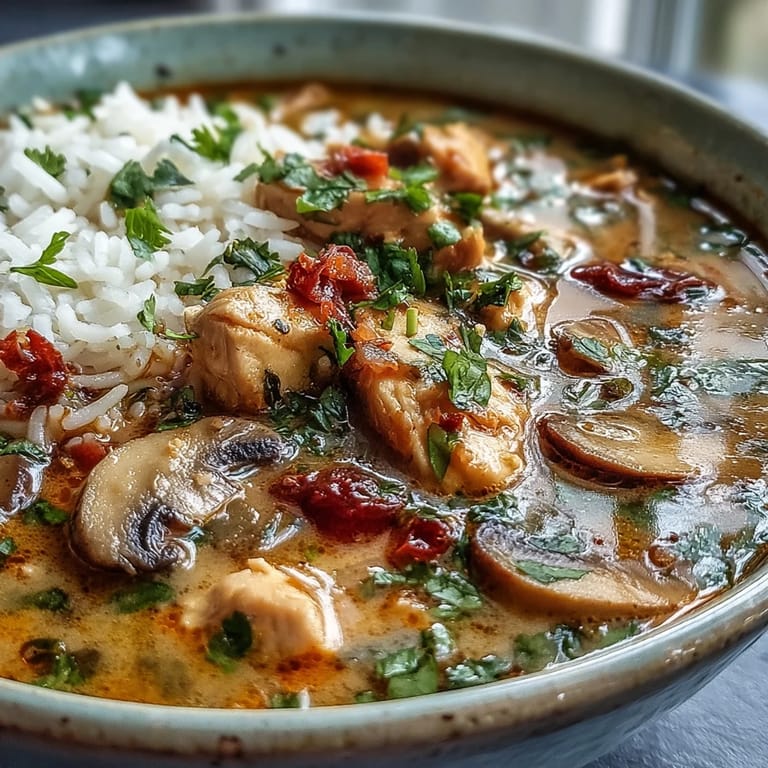
- Stir in your full-fat coconut milk, fish sauce, and brown sugar, then simmer gently for 5 more minutes without letting it boil hard. The soup will deepen to a creamier golden color, and the flavors will finally settle into harmony. This is when you taste and decide if you need more fish sauce, salt, or lime.
- Final touches:
- Fish out the lemongrass stalks and kaffir lime leaves—they've given their all and now they're just obstacles to eating. Squeeze fresh lime juice over the whole pot and adjust seasoning one last time, remembering that lime brightens everything.
- Serve with intention:
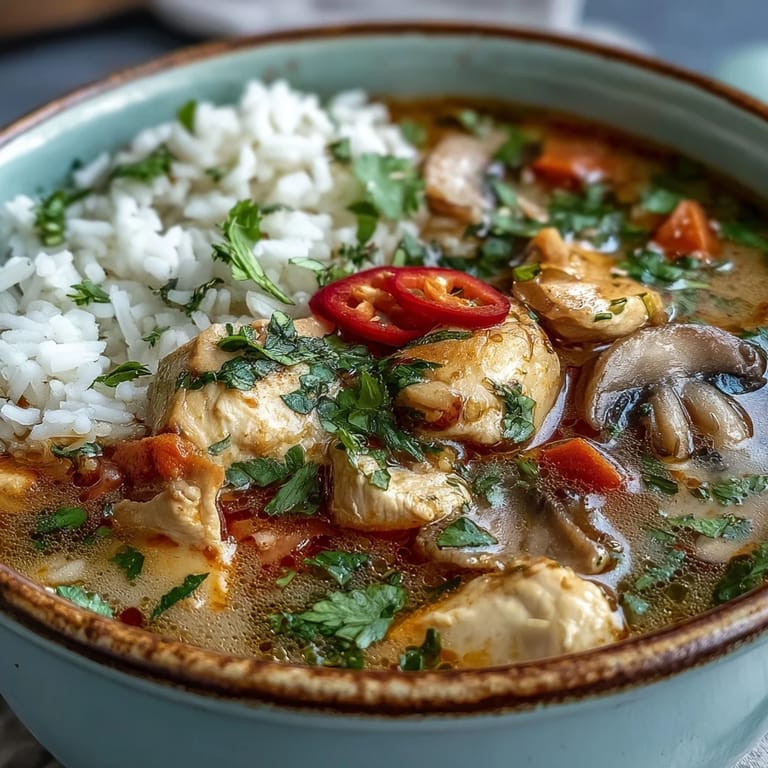
- Ladle into bowls and let each person garnish their own with cilantro, chili, and a lime wedge. This way everyone gets exactly the level of heat and freshness they want, and the whole meal feels personalized.
 Save
Save  Save
Save I served this to my bookclub once, and the conversation completely shifted. We'd been discussing some heavy novel, but somewhere between the second and third bowls, everyone just started talking about their favorite meals and where they felt most at home. That's when I understood that soup isn't just sustenance—it's permission to slow down and actually connect.
Why This Soup Feels Different
Most Thai soups ask you to choose between complexity and speed, but this one doesn't make you sacrifice either. The red curry paste does the heavy lifting while the rice cooks directly in the pot, absorbing flavor without requiring a separate step. It's the kind of meal that bridges the gap between weeknight dinner and something you'd serve when you want to impress.
Variations Worth Trying
I've made this with shrimp for friends who don't eat chicken, and the cooking time stays exactly the same—just add the shrimp after the stock comes to a simmer so they don't overcook. Tofu works beautifully too if you're feeding vegetarians, and it actually absorbs more of the curry flavor than chicken does. Bell peppers, baby corn, and snap peas can all join the party without changing a thing about the method.
The Details That Matter Most
Temperature control is gentler than you might think—once everything is in the pot, lower the heat so the soup simmers rather than boils. A hard boil will break down the coconut milk and make it separate instead of staying silky and cohesive. Let the rice tell you when it's done; it should be completely tender and have absorbed enough liquid that you could almost eat the soup with a fork.
- Taste before you serve, not after—this is your only chance to adjust the seasoning in a way that flavors everything evenly.
- Save a squeeze of lime to add at the very end, even if you've already added some during cooking.
- Full-fat coconut milk is non-negotiable if you want that creamy richness that makes people close their eyes while eating.
 Save
Save 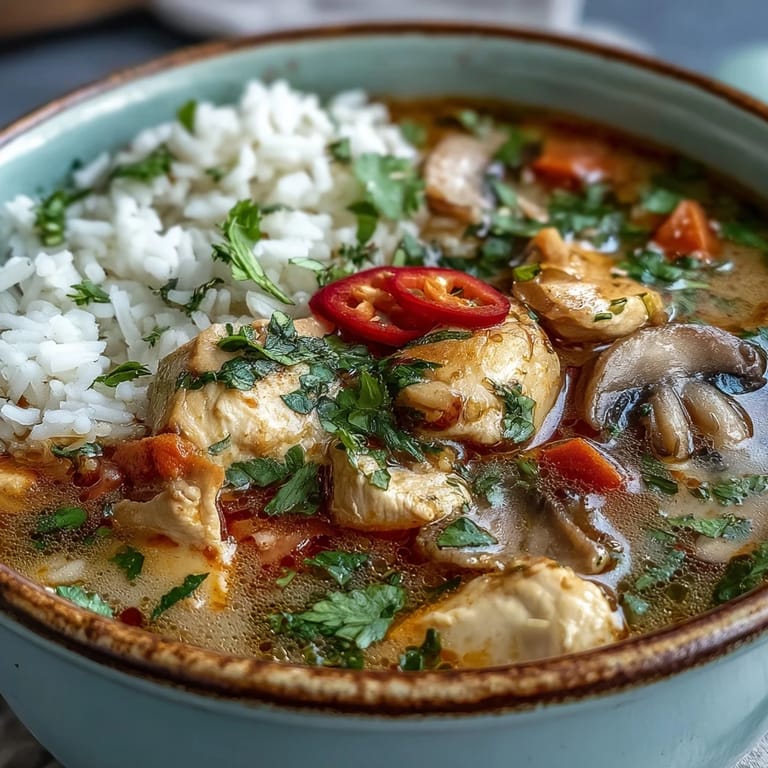 Save
Save This soup has become the thing I make when someone needs feeding, when I need to think clearly, or when I just want to remember why I love cooking. It asks very little of you but gives back everything.
Recipe FAQs
- → Can I use chicken breast instead of thighs?
Yes, you can substitute chicken breast, though thighs provide more flavor and tenderness. If using breast, reduce cooking time slightly to prevent drying out.
- → What can I substitute for fish sauce?
Use soy sauce or tamari for a similar umami depth. Start with 2 teaspoons and adjust to taste, as soy sauce is typically saltier than fish sauce.
- → Can I make this soup vegetarian?
Absolutely. Replace chicken with firm tofu or extra vegetables, use vegetable stock instead of chicken stock, and substitute fish sauce with soy sauce or mushroom sauce.
- → How do I store and reheat leftovers?
Store in an airtight container in the refrigerator for up to 3 days. Reheat gently on the stovetop over medium-low heat, adding a splash of stock or water if needed to thin the consistency.
- → Can I adjust the spice level?
Yes, control heat by adjusting the red curry paste amount. Start with 2 tablespoons for mild, use 3 for medium heat, or add fresh chilies for extra spice.
- → What if I can't find kaffir lime leaves or lemongrass?
While these add authentic flavor, you can omit them or substitute with lime zest and a bit of lemon zest for brightness. The soup will still be delicious.