 Save
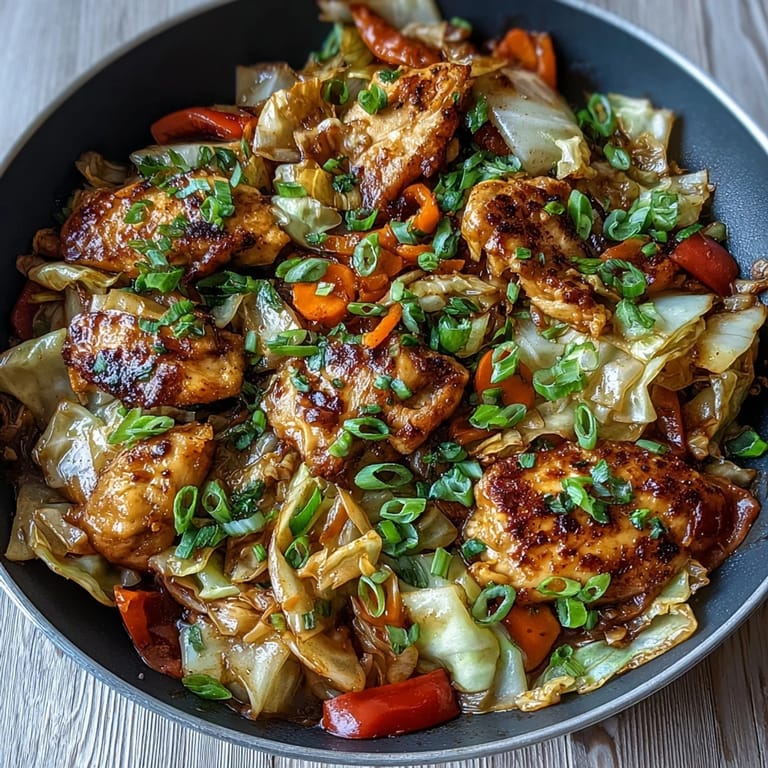
Save The sound of cabbage hitting a hot wok is something I never appreciated until I needed dinner on the table in twenty minutes with only half a fridge to work with. That night, I sliced up what I had, chicken and cabbage mostly, and tossed them with whatever sauces were tucked in the door. The result was so good my partner asked if I'd been hiding cooking skills. I wasn't, I just stumbled onto something that actually worked.
I made this for a friend who swore she hated cabbage, mostly because she'd only ever had it boiled to oblivion. Watching her take a second helping without saying a word was all the validation I needed. Sometimes the best recipes are the ones that change minds quietly, one bite at a time. Now she texts me every few weeks asking for the sauce ratio, which I take as a personal victory.
Ingredients
- Boneless, skinless chicken breast or thighs, thinly sliced: Thighs stay juicier and more forgiving if you overcook them slightly, but breasts work perfectly fine if you slice them thin and don't walk away from the pan.
- Green cabbage, cored and thinly sliced: The backbone of this dish, it wilts just enough to stay tender but keeps a slight crunch that makes every bite interesting.
- Carrot, julienned: Adds a touch of sweetness and a pop of color that makes the whole dish look more intentional than it actually is.
- Red bell pepper, thinly sliced: Brings brightness and a hint of natural sugar that balances the salty, savory sauce beautifully.
- Green onions, sliced: Toss these in at the end for a fresh, sharp bite that cuts through all the richness.
- Soy sauce: The salty foundation of the sauce, use tamari if you need it gluten free and no one will know the difference.
- Oyster sauce: This is where the deep umami comes from, it adds a richness that makes the dish taste like you tried harder than you did.
- Hoisin sauce: A little sweetness, a little tang, it rounds out the sauce and gives it that restaurant quality glaze.
- Rice vinegar: Brightens everything up and keeps the sauce from feeling too heavy or one note.
- Sesame oil: Just a little goes a long way, it adds a nutty aroma that makes the whole kitchen smell amazing.
- Cornstarch: The secret to getting that glossy, clingy sauce that coats every piece instead of pooling at the bottom.
- Sugar: Balances the salt and acidity, you won't taste it directly but you'll notice if it's missing.
- Vegetable oil: High heat friendly and neutral, it lets all the other flavors shine without competing.
- Garlic, minced: The moment it hits the hot oil, you'll know you're making something good.
- Fresh ginger, peeled and grated: Adds warmth and a slight spice that makes the whole dish feel alive and vibrant.
Tired of Takeout? 🥡
Get 10 meals you can make faster than delivery arrives. Seriously.
One email. No spam. Unsubscribe anytime.
Instructions
- Mix the sauce:
- In a small bowl, whisk together soy sauce, oyster sauce, hoisin sauce, rice vinegar, sesame oil, cornstarch, water, and sugar until smooth. Set it aside so it's ready to pour when things get busy.
- Cook the chicken:
- Heat 1 tablespoon vegetable oil in a large skillet or wok over medium high heat, add the chicken, and cook for 4 to 5 minutes until golden and cooked through. Remove it from the pan and set it aside so it doesn't overcook while you handle the vegetables.
- Bloom the aromatics:
- Add the remaining tablespoon of oil to the pan, toss in the garlic and ginger, and sauté for about 30 seconds until the kitchen smells incredible. Don't let them burn or they'll turn bitter.
- Stir fry the vegetables:
- Add the cabbage, carrot, and bell pepper, and stir fry for 3 to 4 minutes until they're tender but still have a little bite. Keep everything moving so it cooks evenly and doesn't stick.
- Combine and glaze:
- Return the cooked chicken to the pan, pour in the prepared sauce, and toss everything together. Cook for 2 to 3 minutes until the sauce thickens and clings to every piece of chicken and vegetable.
- Finish and serve:
- Stir in the green onions, taste, and adjust seasoning if needed. Serve hot, with rice or noodles if you want to stretch it into a full meal.
 Save
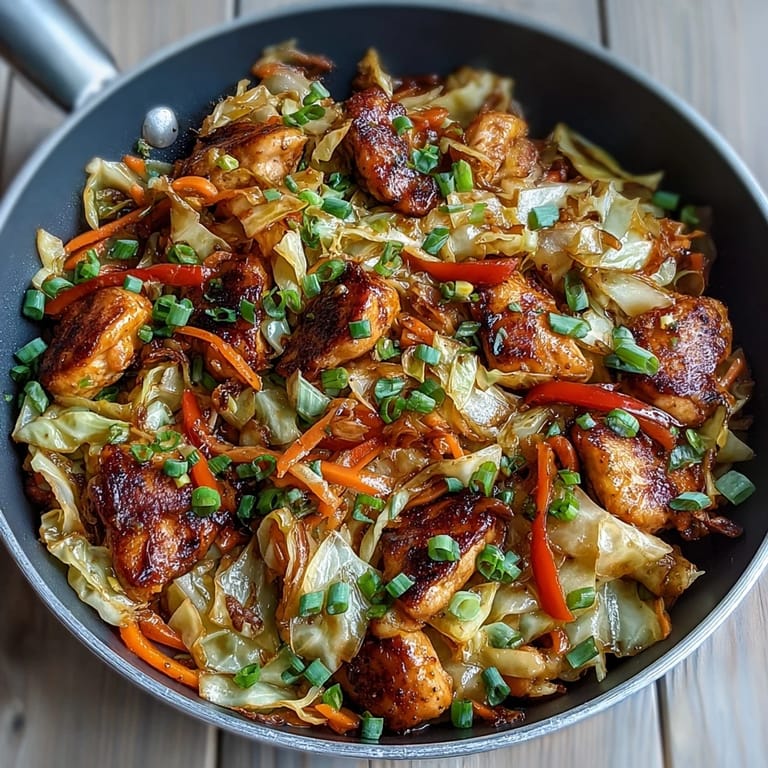
Save The first time I packed this for lunch the next day, I was worried it would turn soggy and sad like most leftovers do. Instead, it tasted even better, the cabbage had soaked up more of the sauce overnight and everything melted together. Now I intentionally make extra just so I have something to look forward to the next afternoon. It's one of those rare dishes that improves with a little time.
Choosing Your Protein
Chicken thighs are more forgiving than breasts because they have a little extra fat that keeps them juicy even if you accidentally overcook them by a minute or two. If you want to use tofu, press it well and cut it into cubes, then fry it until crispy before setting it aside like you would the chicken. Shrimp works beautifully too, just cook it for about 2 minutes per side and pull it out fast so it stays tender. I've even used leftover rotisserie chicken in a pinch, just shred it and toss it in at the end to warm through.
Getting the Vegetables Right
Cabbage might seem like a boring vegetable, but when you slice it thin and hit it with high heat, it transforms into something sweet and slightly charred in the best way. The carrot and bell pepper are there for color and texture, but you could easily swap in snap peas, broccoli, or even zucchini if that's what you have. The key is to cut everything roughly the same size so it all cooks at the same rate and you don't end up with some pieces raw and others overdone. I learned that the hard way after serving a stir fry with crunchy carrots and mushy peppers to a very polite but confused dinner guest.
Serving Suggestions and Extras
This dish is perfect over a bowl of steamed jasmine rice, which soaks up all the extra sauce and turns into the best part of the meal. If you want to make it a little more filling, toss it with cooked noodles, lo mein or rice noodles both work great. Sometimes I'll sprinkle sesame seeds or a handful of crushed peanuts on top for a little extra crunch, and a drizzle of chili oil never hurt anyone who likes a bit of heat.
- Add a pinch of chili flakes or a spoonful of sambal oelek if you want some spice.
- Serve with a side of pickled vegetables to cut through the richness.
- Leftovers reheat beautifully in a skillet with a splash of water to loosen the sauce.
 Save
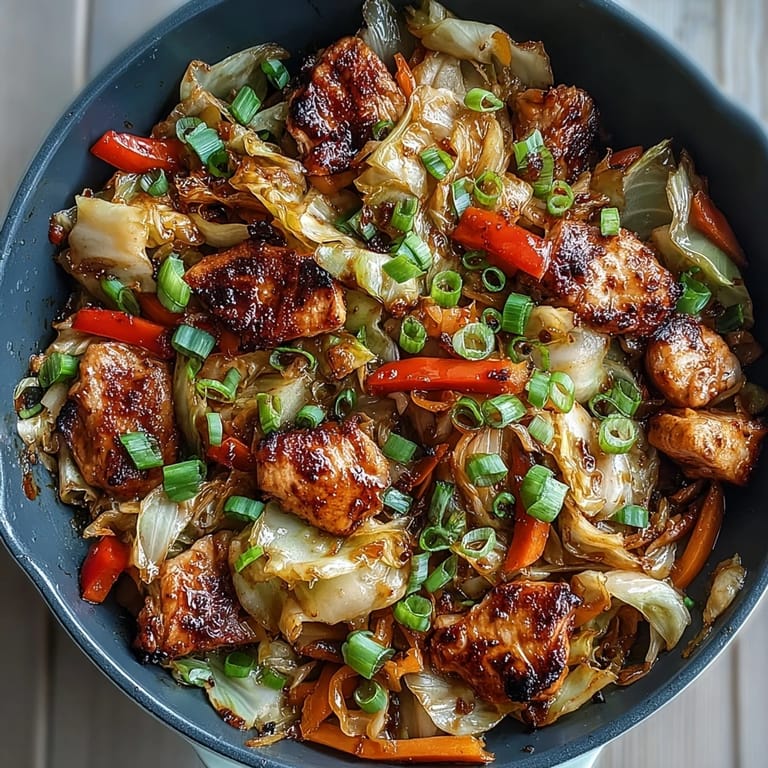
Save This is the kind of recipe that makes weeknight cooking feel less like a chore and more like something you actually want to do. It's fast, it's flexible, and it never disappoints.
Recipe FAQs
- → Can I use chicken thighs instead of breast?
Yes, chicken thighs work wonderfully and add extra juiciness. Slice them thinly and cook for the same amount of time until fully cooked through.
- → How do I keep the cabbage crisp and not soggy?
Cook over high heat and stir-fry for only 3-4 minutes. Avoid overcrowding the pan, which creates steam instead of the desired crisp-tender texture.
- → What can I substitute for oyster sauce?
Use additional hoisin sauce or a vegetarian stir-fry sauce. For a shellfish-free option, look for mushroom-based oyster sauce alternatives available in most Asian markets.
- → Can I make this gluten-free?
Absolutely. Replace soy sauce with tamari and ensure your oyster sauce and hoisin sauce are certified gluten-free versions, which are widely available.
- → How do I store leftovers?
Store in an airtight container in the refrigerator for up to 3 days. Reheat in a skillet over medium heat to maintain the vegetables' texture better than microwaving.
- → Can I add other vegetables?
Yes, snap peas, broccoli, mushrooms, or zucchini all work well. Add harder vegetables with the cabbage and quicker-cooking ones near the end.