 Save
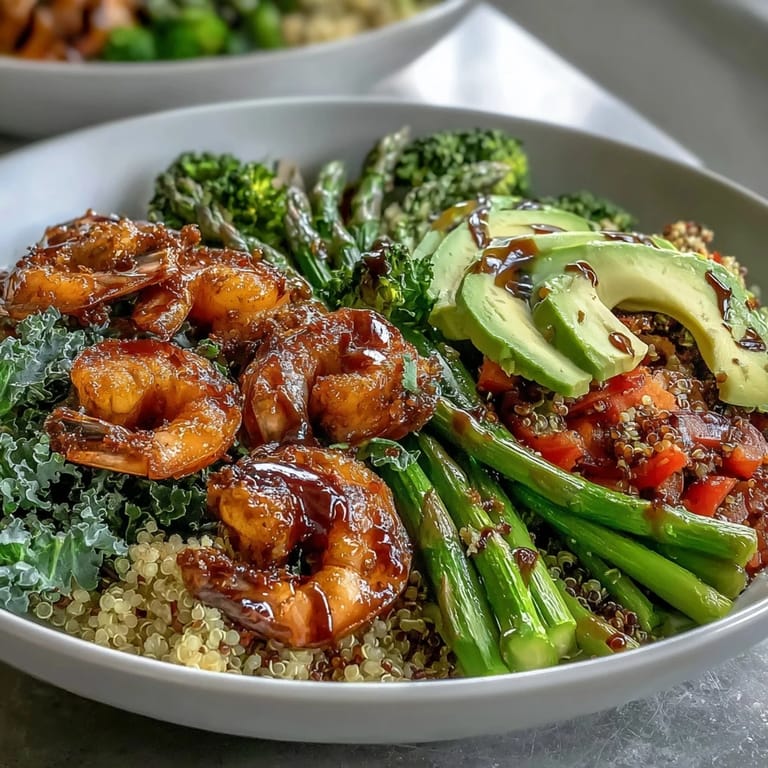
Save There's something about assembling a bowl that makes you feel like you're actually taking care of yourself. I discovered this particular combination on a Tuesday afternoon when my fridge was bursting with half-used vegetables and I didn't want to waste a thing. The shrimp cooked up golden in minutes, the quinoa had this nutty warmth, and suddenly what started as an efficiency puzzle turned into something I found myself craving all week.
I made this for a friend who was going through one of those health overhauls, and I watched her expression shift from skeptical to genuinely pleased as she took the first bite. She'd been dreading "wellness food," convinced it would taste like punishment, but there was nothing punitive about this at all. That's when I realized the real magic wasn't the ingredients themselves, but how they worked together to create something that felt abundant rather than restrictive.
Ingredients
- Large shrimp, peeled and deveined (200 g): Fresh shrimp cooks in moments and adds a luxurious protein boost, but thaw them fully and pat them completely dry before cooking or they'll steam instead of sear.
- Quinoa, uncooked (100 g): This grain has a subtle nuttiness and fluffy texture that pairs beautifully with everything else, and it's naturally packed with all nine amino acids.
- Water (250 ml): Use a 1 to 2.5 ratio for quinoa, and don't skip the rinsing step beforehand as it removes bitterness.
- Broccoli florets (100 g): Blanching them keeps them bright green and crisp-tender rather than mushy, which makes all the difference in the final bite.
- Asparagus, trimmed and cut into 2-inch pieces (100 g): The same blanching treatment gives asparagus a wonderful snap without losing its tender heart.
- Red cabbage, thinly sliced (100 g): Its natural sweetness and crunch provide textural contrast, plus the vibrant color makes the whole bowl look like it means business.
- Medium tomato, diced (1): Choose one that's actually ripe and flavorful, as underripe tomatoes can make the bowl taste flat.
- Ripe avocado, sliced (1): Add it just before serving or toss it with a little lemon juice to prevent browning, and look for one that yields slightly to gentle pressure.
- Extra virgin olive oil (2 tbsp): Quality matters here since it's a main component of the dressing, and the fruitier the oil, the better the final flavor profile.
- Balsamic vinegar (1 tbsp): A good balsamic has depth and slight sweetness that transforms the simple dressing into something memorable.
- Salt and freshly ground black pepper: Freshly ground pepper makes a noticeable difference compared to pre-ground, and don't undersalt the shrimp cooking water.
- Fresh parsley or cilantro, chopped (1 tbsp optional): Either herb adds a brightness that ties everything together, though cilantro has a stronger personality.
- Lemon wedges for serving (optional): A squeeze at the very end lifts all the flavors and adds acidity that makes the bowl feel complete.
Tired of Takeout? 🥡
Get 10 meals you can make faster than delivery arrives. Seriously.
One email. No spam. Unsubscribe anytime.
Instructions
- Prep and rinse your quinoa:
- Run the quinoa under cold water in a fine-mesh sieve, letting the water flow through for about 30 seconds until it runs clear. This step removes the natural coating that can make it taste bitter or soapy.
- Cook the quinoa gently:
- Combine the rinsed quinoa with water in a saucepan and bring it to a boil, then immediately drop the heat low, cover, and let it simmer undisturbed for 12 to 15 minutes. You'll know it's done when the water is absorbed and you see those little spiral tails popping out of each grain.
- Blanch the vegetables while quinoa cooks:
- Bring a pot of lightly salted water to a boil and drop in the broccoli and asparagus together for just 2 to 3 minutes. The goal is to keep them just barely tender with a satisfying crunch, not soft.
- Shock them in ice water immediately:
- Drain the vegetables and plunge them into ice water right away to stop the cooking process and lock in that bright green color. Pat them dry before assembling your bowls.
- Sear the shrimp with confidence:
- Heat just 1 teaspoon of olive oil in a skillet over medium-high heat until it shimmers, then add the shrimp in a single layer. Season with salt and pepper, then resist the urge to move them around.
- Let them cook undisturbed for the magic:
- After 2 to 3 minutes, the side touching the pan will turn pink and opaque, and that's when you flip. Another 2 to 3 minutes on the other side and they're done, still tender and not rubbery.
- Make your dressing while everything finishes:
- In a small bowl, whisk together the remaining olive oil, balsamic vinegar, salt, and pepper. Taste it and adjust the seasoning because this is the flavor backbone of your entire bowl.
- Build your bowls thoughtfully:
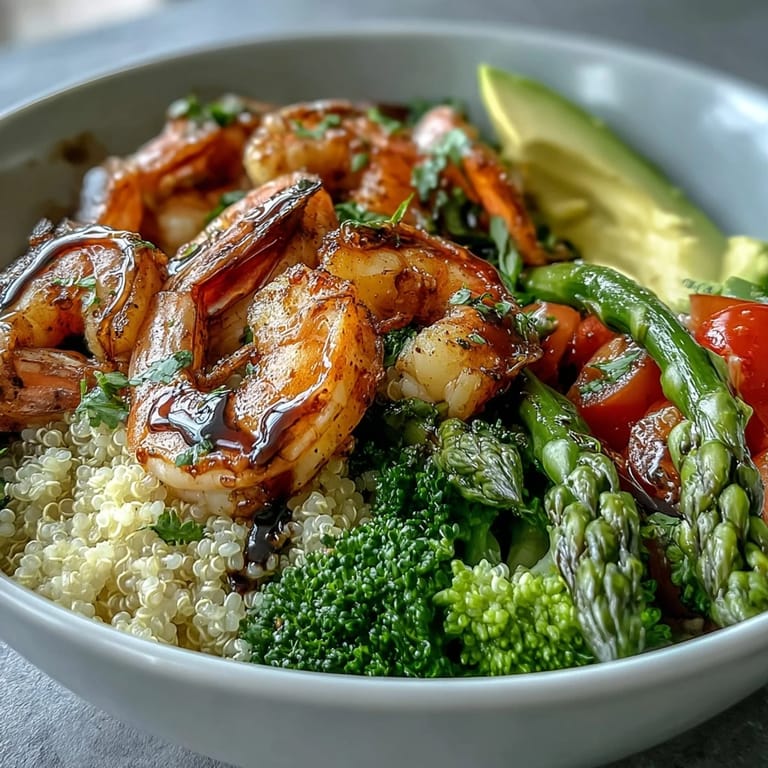
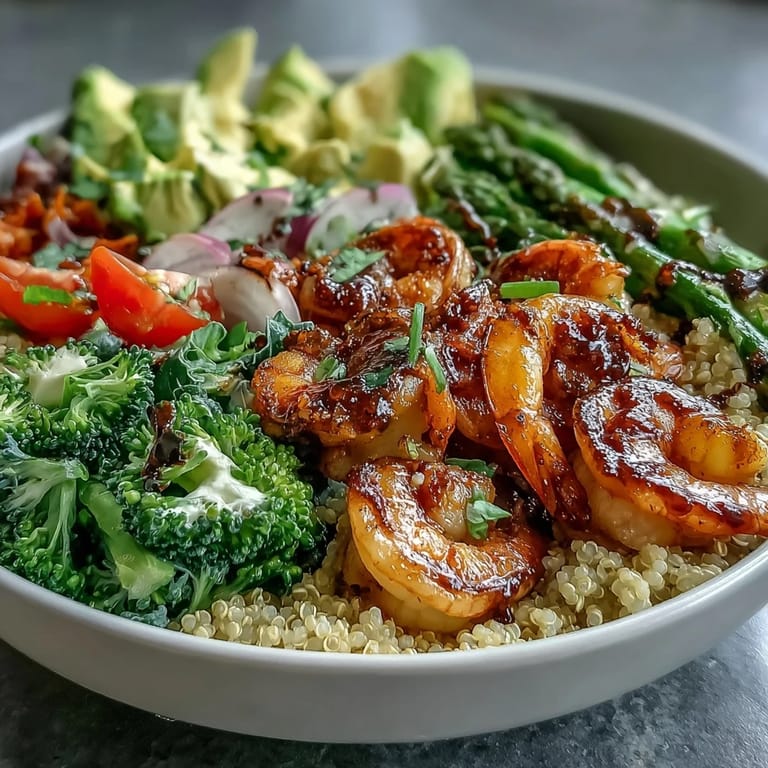
- Divide the warm quinoa between two bowls, creating a base that's slightly mounded in the center. Arrange each vegetable, the shrimp, and avocado in separate sections around the quinoa like you're creating a map.
- Dress and finish with intention:
- Drizzle the balsamic dressing over everything, then add the herbs and lemon wedge if you're using them. Serve right away while the quinoa is still warm and the vegetables have their texture.
 Save
Save My mother ate this version once and told me it was the kind of food that made her feel energized rather than deprived, which meant something coming from someone who grew up on heavy, comforting meals. That conversation shifted how I thought about healthy eating, turning it from a set of restrictions into a way of making myself feel genuinely good. Food doesn't have to be boring to be good for you.
Why This Bowl Actually Works
The real secret is the balance between warm and cool, protein and vegetables, soft and crunchy. When you mix warm quinoa with cold blanched vegetables and creamy avocado, your palate stays interested from the first bite to the last. Nothing dominates, everything supports, and somehow that restraint feels more luxurious than something heavy and overwhelming.
Switching Things Up Seasonally
In spring, I swap the tomato for fresh peas and add tender asparagus tips. Summer brings cherry tomatoes and cucumber slices. Fall makes me lean toward roasted carrots and sliced beets instead of raw vegetables. Winter means I'll sometimes add a handful of massaged kale or hearty greens to replace the raw cabbage, and I'm not above roasting the broccoli with a bit of olive oil and garlic to make it feel more substantial when the weather turns cold.
Building Your Bowl Like You Mean It
The arrangement matters more than you'd think because eating is a visual experience first. When you section your vegetables rather than tossing everything together, each forkful becomes intentional and you notice the individual flavors more acutely. Plus, there's something almost meditative about arranging ingredients with care, as if you're honoring the time it took to grow and prepare them. It's a small shift, but it changes how the meal feels entirely.
- Don't crowd your bowl so much that you can't see the different components, as the visual appeal is half the enjoyment.
- Keep warm elements and cool elements separate until the moment you eat so textures stay distinct and interesting.
- The dressing is the last thing that goes on because it pulls all the flavors together at the moment you're ready to eat.
 Save
Save This bowl has become my answer to that moment when you want something that tastes good, looks beautiful, and doesn't make you feel like you're sacrificing flavor for wellness. Once you get comfortable with the basic structure, you'll start riffing on it based on what's in your kitchen, and that's when it truly becomes your own.
Recipe FAQs
- → Can I make this Buddha Bowl ahead of time?
Yes, you can prepare the quinoa and blanched vegetables up to 2 days in advance. Store them separately in airtight containers in the refrigerator. Cook the shrimp fresh and assemble just before serving for the best texture and flavor.
- → What protein alternatives work well in this bowl?
Grilled chicken breast, baked tofu, or pan-seared salmon make excellent substitutes for shrimp. For a plant-based version, try chickpeas or tempeh. Adjust cooking times accordingly based on your chosen protein.
- → How do I know when the shrimp are properly cooked?
Shrimp are done when they turn pink and opaque throughout, typically 2-3 minutes per side. Avoid overcooking as they can become rubbery. The internal temperature should reach 145°F (63°C).
- → Can I use other grains instead of quinoa?
Absolutely. Brown rice, farro, or bulgur work wonderfully as alternatives. Adjust cooking liquid and time according to package directions. For quicker options, try pre-cooked grains or cauliflower rice for a low-carb twist.
- → What vegetables can I substitute seasonally?
Swap in roasted sweet potatoes, bell peppers, zucchini, or cucumber depending on what's fresh and available. Winter squash, Brussels sprouts, or kale work well in colder months. Keep colors vibrant for the most appealing presentation.
- → Is the dressing customizable?
Certainly. Add honey or maple syrup for sweetness, Dijon mustard for depth, or minced garlic for extra kick. A squeeze of fresh lemon juice brightens the flavors. Store any extra dressing in the refrigerator for up to a week.