 Save
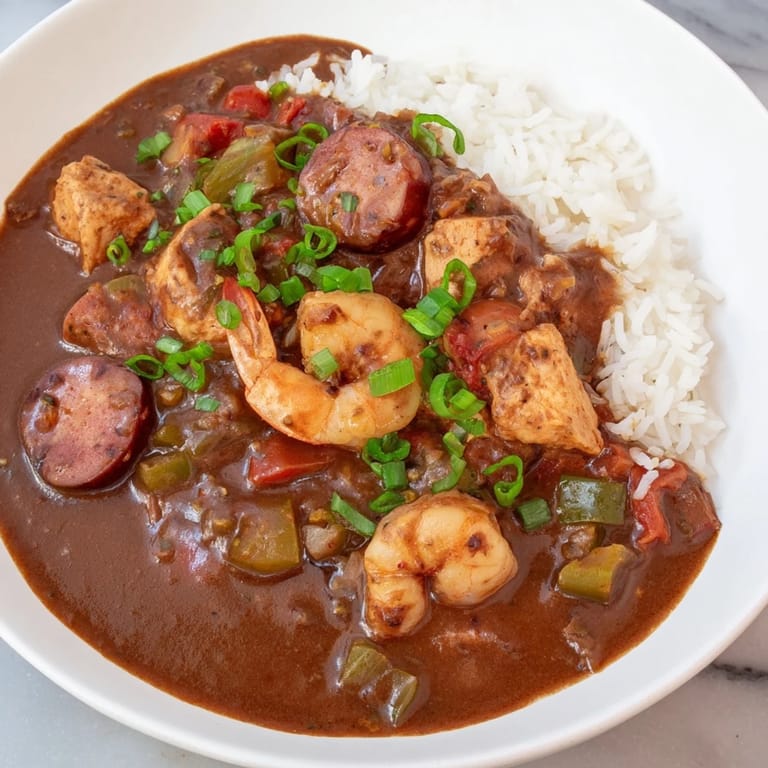
Save The first time I made gumbo, I was standing in a crowded New Orleans kitchen on a humid August afternoon, watching my friend's grandmother stir a pot with the kind of patience I'd never seen before. She didn't measure anything, just knew by color and smell when the roux had hit that perfect chocolate-brown stage, and I realized then that gumbo isn't really about following a recipe—it's about understanding the rhythm of layering flavors until they become something greater than their parts. That lesson stuck with me, and now whenever I make this stew, I'm chasing that same meditative feeling she had, the one where cooking becomes a conversation between you and the pot.
I remember the first time I served this to people who'd never had real gumbo before, and watching their faces when they took that first spoonful—the way their eyes widened at the complexity, the heat, the richness of the broth—made me understand why this dish has survived centuries. Someone asked if I'd been cooking it all day, and when I said it was done in under two hours, they didn't believe me until I showed them the pot.
Ingredients
- Andouille sausage: This smoky, spiced sausage is the backbone of the dish's depth; slice it thick enough to hold its shape during the long simmer.
- Chicken thighs: They stay tender and flavorful in the broth, unlike breast meat which can dry out; don't skip this for quality.
- Shrimp: Add these only at the very end so they cook through without becoming rubbery.
- Onion, bell pepper, celery: This holy trinity is non-negotiable; the three together create the aromatic foundation that makes gumbo taste like gumbo.
- Garlic: Mince it fine so it dissolves into the broth rather than sitting in chunks.
- Tomatoes: Fresh or canned both work, but drain canned tomatoes to avoid watering down your broth.
- Vegetable oil and flour: The oil should be hot enough that the flour sizzles slightly when it hits the pot; this ensures even browning.
- Chicken or seafood stock: Use good stock here—it's not just liquid, it's flavor.
- Bay leaves, thyme, smoked paprika, cayenne: These are your spice framework; start conservative with the cayenne and taste as you go.
- Worcestershire and hot sauce: These add savory depth and a final kick of heat; don't leave them out.
- Filé powder: Optional but traditional; it thickens the gumbo and adds an earthy sassafras note that feels authentic.
Tired of Takeout? 🥡
Get 10 meals you can make faster than delivery arrives. Seriously.
One email. No spam. Unsubscribe anytime.
Instructions
- Gather and prep everything first:
- Mise en place isn't just a fancy term here—it's survival. The roux demands your full attention, and you can't leave it to chop garlic halfway through.
- Make your roux:
- Heat the oil over medium heat until it shimmers, then whisk in the flour slowly to avoid lumps. Keep stirring—and I mean don't stop—for 15 to 20 minutes until it transforms into a deep chocolate brown. You'll smell it change, and your arm will know when it's done because the constant whisking starts to feel hypnotic.
- Add the holy trinity:
- Once the roux hits that perfect color, dump in the onion, pepper, and celery all at once; they'll sizzle and soften over about 5 minutes. The roux will cling to them, building that rich base layer.
- Bloom the garlic:
- Stir in the minced garlic for just 1 minute so it releases its aroma without burning; burned garlic tastes bitter and will haunt you.
- Brown the proteins:
- Add the sausage and chicken, stirring for about 5 minutes until they develop a light golden crust on the outside. You're not cooking them through yet, just waking up their flavors.
- Build the broth:
- Stir in the tomatoes, bay leaves, thyme, smoked paprika, cayenne, salt, and black pepper, then slowly pour in the stock while stirring so everything blends smoothly into the roux. It'll look like magic as the liquid thickens.
- Let it simmer low and slow:
- Bring to a gentle boil, then reduce the heat and let it simmer uncovered for 45 minutes, stirring occasionally so nothing sticks to the bottom. The flavors will meld and deepen, and your kitchen will smell like Louisiana.
- Add the shrimp at the end:
- If you're using it, add shrimp only in the last 10 minutes; it cooks so fast that more than that and you'll have rubber. You'll know it's done when it's pink and firm.
- Finish with flavor:
- Stir in the Worcestershire and hot sauce, then taste and adjust salt or heat as needed. This is your moment to make it yours.
- Optional thickening:
- Remove from heat and stir in filé powder if you want it—about ½ to 1 teaspoon. Don't add it while the gumbo is still boiling or it can get stringy and odd.
 Save
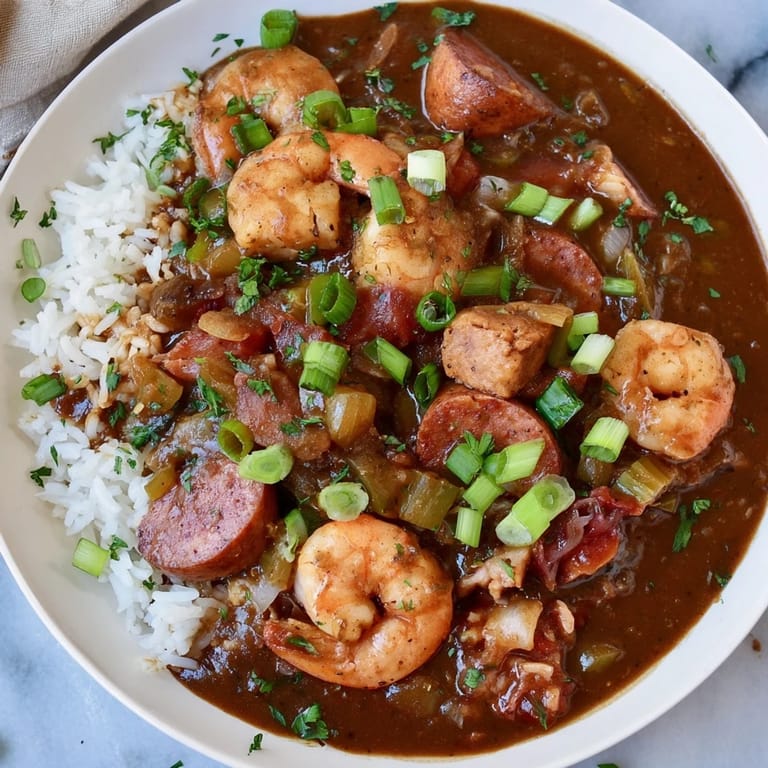
Save There's a moment, right around hour two, when you're standing over the pot and the aroma has filled your whole house, that you understand why people talk about gumbo with such reverence. It stopped being about following instructions and started being about patience, trust, and the magic of letting time do its work.
The Roux: Your Most Important Step
The roux is where most people either fall in love with gumbo or give up on it entirely. It's the one moment where you can't multitask, can't step away, can't check your phone. The flour and oil transform together over heat into something that holds all the other flavors, and that chocolate-brown color isn't just beautiful—it's the whole foundation of the dish's depth. I've learned that using a heavy-bottomed pot makes all the difference because thin pans create hot spots that burn the roux unevenly.
Protein Choices and Flexibility
This recipe uses both chicken and sausage, which gives you that classic comfort-food heartiness, but gumbo is forgiving enough to adapt to whatever you have. Some nights I skip the chicken entirely and double the sausage; other times I go seafood-only with crab, oysters, and shrimp. The key is understanding that whatever protein you choose, the gumbo will taste like itself because the broth is so flavorful on its own. I've even made vegetarian versions by loading up on okra and extra vegetables, and while it's a different dish, it's still delicious.
Serving and Storing Your Gumbo
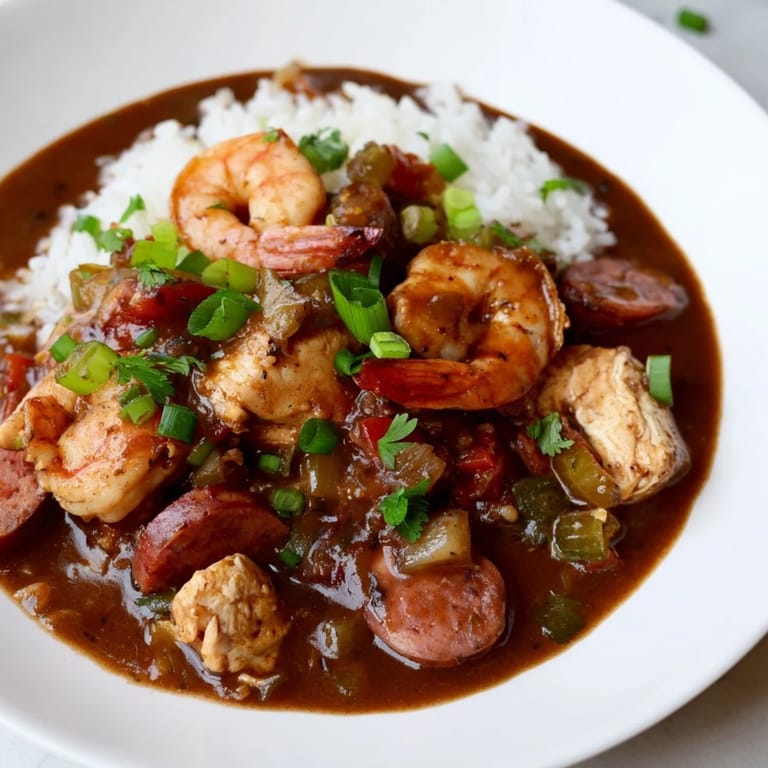
Always serve gumbo hot over fluffy white rice, and the contrast between the steaming bowl and the fluffy rice is non-negotiable. Pass hot sauce on the side so people can adjust the heat to their own taste. Gumbo actually tastes better the next day after the flavors have had time to settle and marry together, so don't hesitate to make it ahead.
- Leftover gumbo keeps in the fridge for up to four days, and it reheats beautifully on the stovetop over gentle heat.
- You can freeze it for up to three months, though filé powder doesn't freeze as well, so add that fresh after thawing.
- A squeeze of fresh lemon juice right before serving adds brightness that cuts through the richness.
 Save
Save There's something deeply satisfying about making gumbo, the way it teaches you patience and rewards you with something that tastes infinitely better than the sum of its parts. Once you make it, you'll understand why people come back to it again and again.
Recipe FAQs
- → What is the purpose of the roux in this stew?
The roux thickens the broth and adds a deep, nutty flavor, essential for the stew's rich texture and color.
- → Can I use seafood instead of meat in this dish?
Yes, shrimp and other seafood like crab or oysters can replace the meats for a traditional seafood variant.
- → How long should the roux be cooked?
Cook the roux for 15–20 minutes until it reaches a deep chocolate brown without burning to develop full flavor.
- → What vegetables form the base of the stew?
The base includes the 'holy trinity' of onion, bell pepper, and celery, creating a fragrant foundation.
- → Is filé powder necessary, and when is it added?
Filé powder is optional; it thickens the stew and adds unique flavor and should be stirred in off heat to avoid stringiness.
- → What type of rice is best served with this stew?
Fluffy long-grain white rice is recommended to complement the hearty and flavorful stew.